
Bengali cuisine is usually considered comparatively lower in calories compared to most of the other Indian cuisines, but still full of flavours. The spice level is moderate and well balanced. If there is a strongly flavoured ingredient, there is also a mellow ingredient to counter it. A typical Bengali meal comprises of components ranging from a rich protein item from a vegetable or animal source, mildly flavoured vegetables, fruits or vegetarian dishes rich in fibre, vitamins & minerals, a light carbohydrate element which is usually steamed rice or pulao, other moderately or mildly spiced or mellower meal accompaniments or palate cleansers and a moderately heavy dessert. A typical homely Bengali meal, be it a non-vegetarian or a vegetarian one usually has components which could be enjoyed equally from a 4-year old school going kid, a youngster or a grandfather or grandmother alike.
A bengali tok or ombol that is tangy which means acidity is usually a sweet & sour chutney which is an important component of Bengali meal & are consumed towards the end of the meal just before the dessert to disconnect the dessert episode with the main course episode in the same meal. It also acts as a palate cleanser to make the savouring of dessert more enjoyable without taking a break. The ombol or acidity also helps in hydrolysis or breakdown of peptide bonds in heavy proteins consumed in the meal, thus helping in the digestion process and getting the stomach ready for another heavy-duty episode of dessert.
The Bengali chutney usually consists of a variety of fruits or tangy vegetables cooked in a sugary syrup along with spices and are thick or jelly like in consistency . However, a typical bengali tok is different from the chutney which is thinner in consistency i.e. runny, usually very mildly spiced & tangier than a chutney. Tok is usually preferred in the summer season when it acts as perfect summer coolant.
Indian summers are always bad, hot & humid with a lot of dehydration happening around it, and people feel like re-hydrating themselves every time with fruit based drinks and fruit juices, shakes, soups, sherbets, sorbets, smoothies & ice-creams. A Bengali tok also is ideal food for Indian summers which hydrates you and at the same time teasing your taste buds with its soothing sweet & sour taste.
Chalta (in bengali) or Elephant Apple or Outenga in assamese (Scientific name: Dillenia indica) is a wild tropical fruit found in the tropical & subtropical forests of Asia including China and India. In India, it is found in the forests of Northeast India especially Assam and Meghalaya, in the states of West Bengal, Odisha, Jharkhand & South India. Highly rich in fibres and antioxidants, they are popular as a tropical fruit for human as well as wild animals & are loved by elephants.


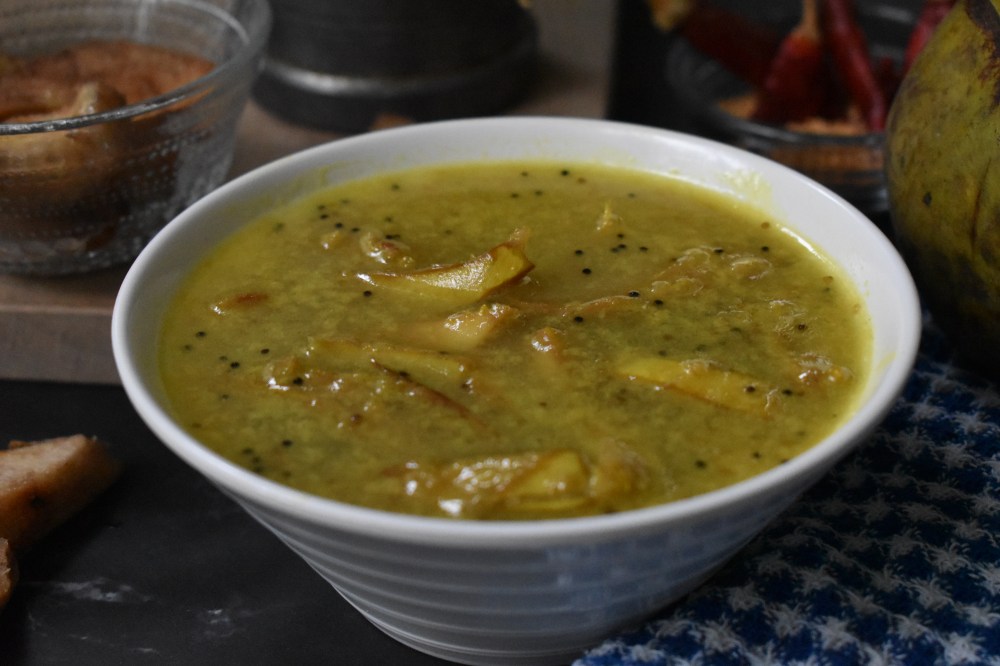
The recipe I am sharing here is a very simple & homely preparation of this wonderful fruit for a meal accompaniment which is very comforting, delicious and healthy at the same time & will also aid in digestion of your midday meal. Maa cooks this awesome tok mostly during this season from the hindu month of chaitra to baisakh i.e. from March to April, when it is available abundantly and after which it goes unavailable usually for few months. This recipe will surely tickle your taste buds and make you fall in love with it . Now, jump to the recipe here :
RECIPE :
Ingredients :
- Chaaltaa (washed & cut into pieces) – 1.
- Tamarind – 2-3 seeds or 1 tsp. pulp.
- Turmeric powder – A pinch
- Salt – 1/4th tsp or to taste
- Sugar – 2 tbs or to taste
- Dry red chilli – 1
- Mustard seeds – ½ tsp.
- Refined oil – 1 tsp
Procedure :
- Take the cut pieces of chaaltaa n a bowl and wash them thoroughly. Drain the water completely & keep aside.
- In a mortar-pestle, take the pieces in batches and crush them slightly so that juicy pulp inside is exposed.
- Keep the crushed pieces in a bowl.
- Heat oil in a wok, when the oil is hot enough, add the dry red chilli & sauté.
- When the chilli turns dark, add the mustard seeds to splatter.
- Add the crushed chaaltaa pieces mix and sauté over a low to medium flame.
- Add turmeric powder, salt & tamarind and mix.
- Sauté for 2 to 3 minutes over a medium flame.
- Add water (approx. 200 ml) to the mixture and bring it to boil over a low flame.
- When the chaaltaa is completely cooked or turns soft, add sugar.
- Add some more water to adjust the consistency, which should be completely runny.
- Bring it to boil and switch off the flame.
- Bring down from the flame and let it cool down completely.
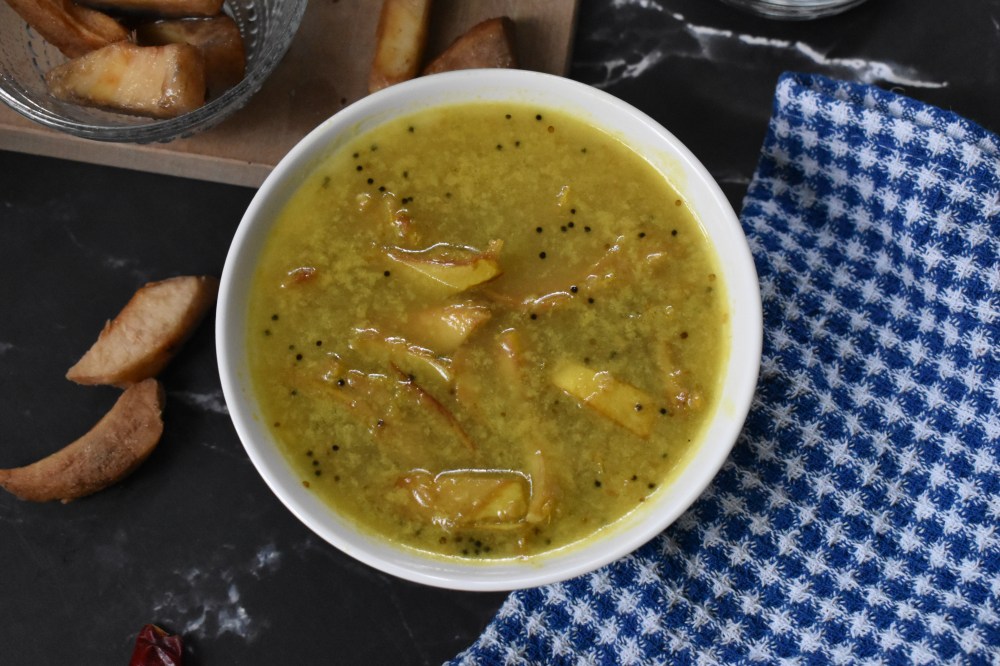
- Your refreshing chaaltaar tok is ready to be served or you may also refrigerate it for sometime to serve it chilled in the scorching summer afternoons.
Discover more from FOODIESTREASURE
Subscribe to get the latest posts sent to your email.

 FOODIESTREASURE
Seeing elephant apple for the first time!
LikeLiked by 1 person
Yes it is lesser known in other parts of India, however commonly found here in northeastern india & bengal.
LikeLiked by 1 person