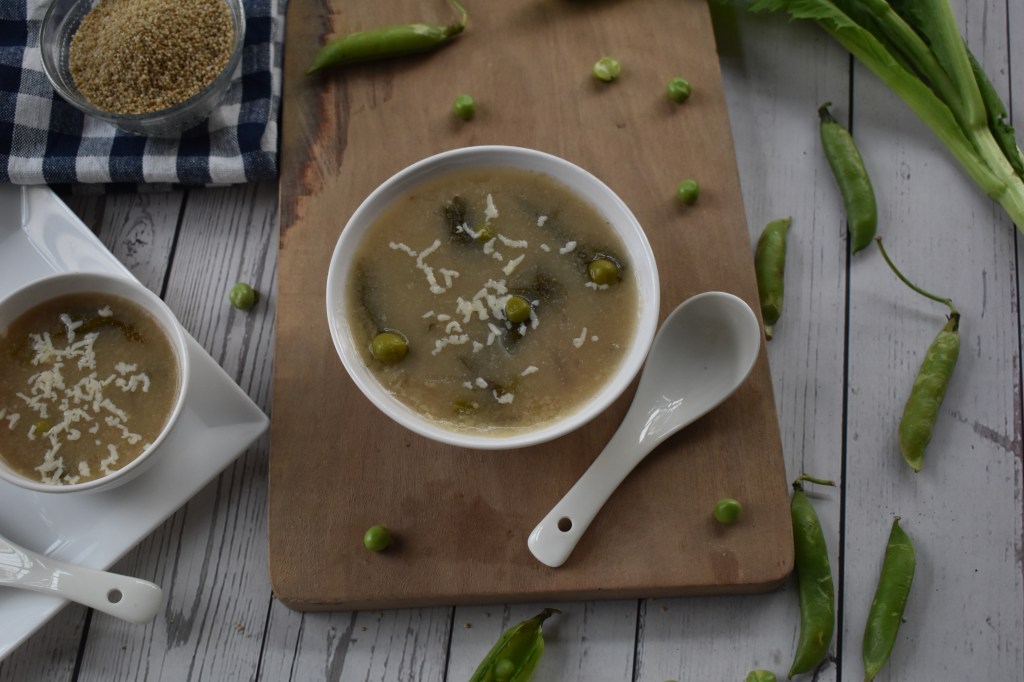
Millets were always in our diet from centuries and are known to be consumed some 7000 years ago when multi-crop agriculture and settled farming societies have formed. Millets were being cultivated across Asia and Africa as major food crops for human consumption some 4,000 years ago, and they gradually became major grains in Europe during the middle ages. Not only millets are high on nutrients and health benefits, but also they are good for the environment with low requirement of water or other fertilizers or chemicals. With the aim to create awareness and increase production & consumption of millets, United Nations with the initiative and advice from the Government of India, declared 2023 the International Year for Millets. There are scores of millet types grown in india or abroad, the prominent among them are ragi (finger millet), Jowar (sorghum), bajra (pearl millet), samak chawal or sanwa (barnyard millet), barri (proso or common millet), kangni (foxtail millet), kodra (kodo millet), kutki (little millet) etc.
Millets are basically highly varied groups of small-seeded grasses widely grown across the world as cereal crops or grains for human food as well as fodder. Though they belong to different taxa, yet most of the species of millets belong to the tribe Paniceae. 97 percent of all the millets in the world are grown in developing countries. They are the important crops in the semiarid tropics of Asia and Africa which include parts of India, Mali, Nigeria and Niger. These crops are favoured in these areas due to their high productivity and short growing season under dry, high-temperature conditions.
Their cultivation requires limited or no use of fertilizers and pesticides and hence are mostly grown organically. Millets are full of tannins, phytates, and phenols that protect our body cells from damage and gives protection against lifestyle disorders like high blood pressure, diabetes and high cholesterol. Millets are high in nutrition. They are rich in dietary fibres and also serve as good source of protein, micronutrients and phytochemicals. These small grain goodies contain about 65-75% carbohydrates, 7-12% proteins, 2-5% fats and about 15-20% dietary fibres. Since, they are rich in fibres, the are considered excellent for our gut health. Millets are also Gluten free and hence good for the people who are gluten-intolerant.
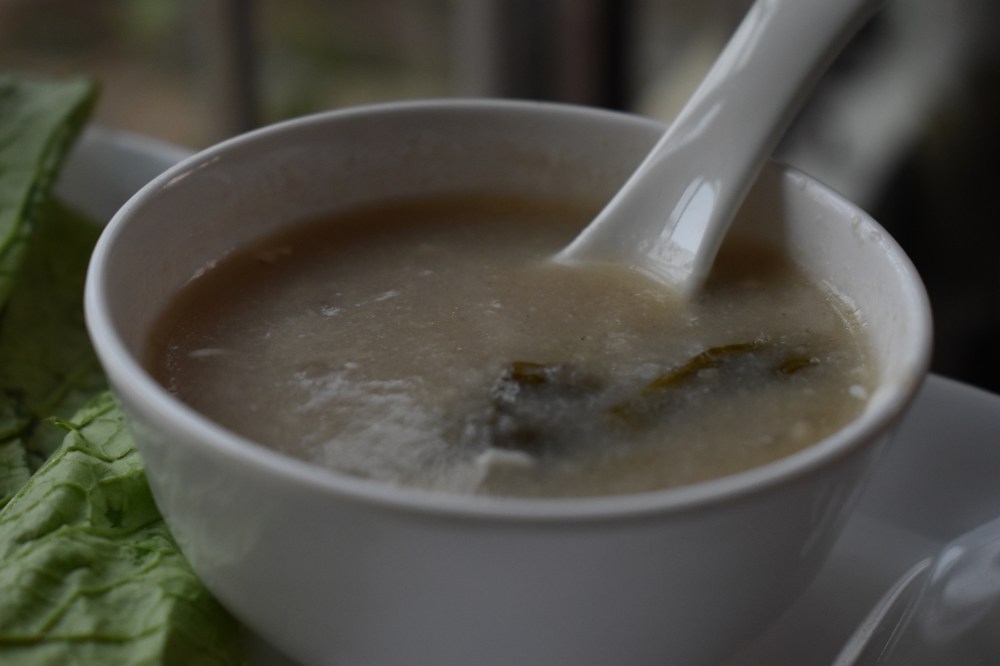
Among the wide varieties of millets available, here I am using Barnyard Millet or Samak rice for my dish as it is a very commonly used millet in India especially during vrat or fasting for rituals when usually no cereals are consumed. Barnyard millets are a rich source of iron, magnesium, phosphorus, phenols, flavonoids and antioxidants.They are also good sources of soluble and insoluble dietary fibres. This creamy, light, comforting soup that I have prepared here along with the goodness of mustard greens which is again a wonder ingredient in terms of its flavour & nutrition profile is the best way to celebrate the wholesomeness of these small grain power houses called millets or Shree Anna as named by our honourable prime minister Shri Narendra Modi ji. This recipe of mine is a small effort from foodiestreasure.com towards celebrating the wholesome goodness of these little wonders. Let us take a look now at the recipe elaborated below :
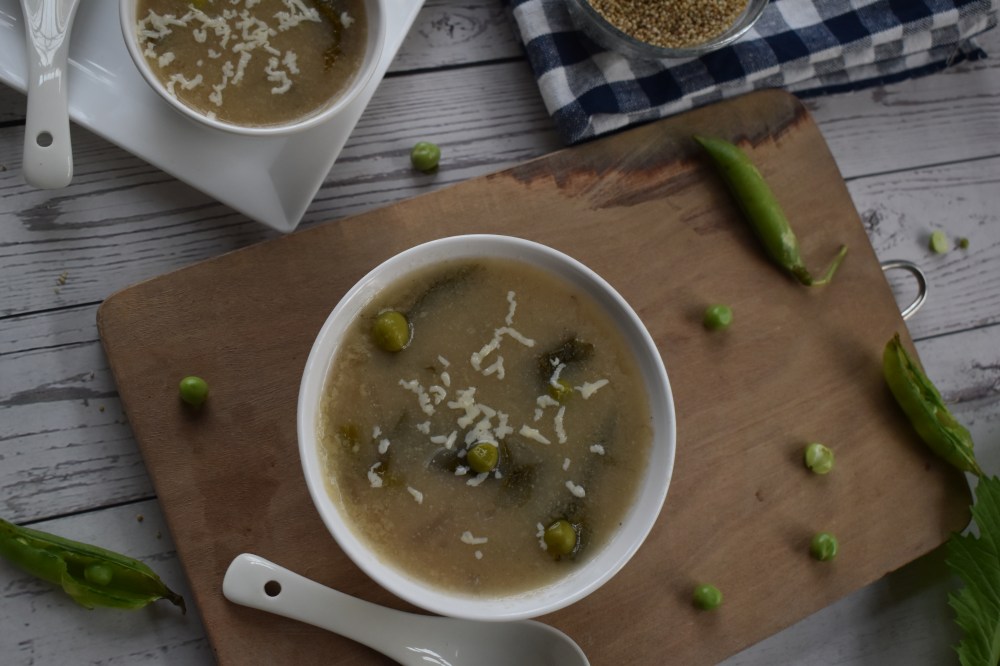
RECIPE:
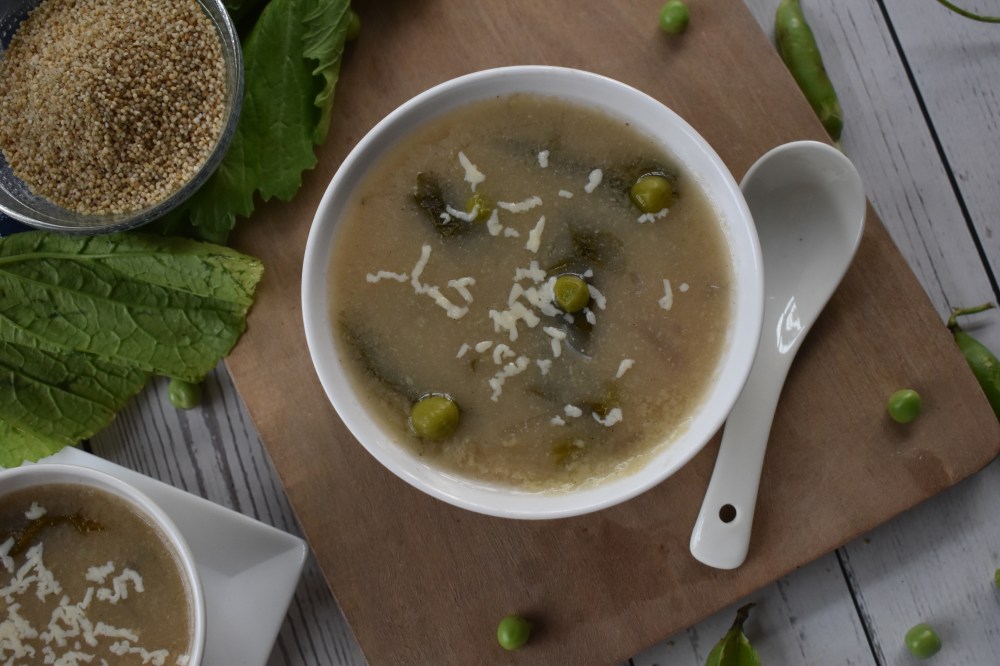
Ingredients :
- Samak rice/Barnyard millet (ground to smooth powder) – 2 tbs.
- Tapioca pearls (ground to smooth powder) -1 tbs.
- Mustard green leaves – 1 or 2.
- Green peas or corns (boiled) – 1/4th cup.
- Onion (finely chopped) – 1 medium size.
- Garlic (finely chopped) – 2 cloves.
- Black pepper (freshly crushed) – 1/2 tsp or as per taste.
- Salt – as per taste.
- Refined oil – 1 tsp.
- Lemon juice – 1 tsp.
- Cheese (optional) – grated for garnishing.
Preparation :
A) For grinding barnyard millet :–
- Wash the millet grains with tap water & let them dry by spreading over a colander or over a tray. You may sun dry it for 1 or 2 hours or oven dry it at low temperatures.
- Grind the washed & dried millets in a grinder to make a smooth powder. The powdered millet can be stored in an air tight container even for a couple of weeks.
B) For grinding tapioca pearls :-
- Wash and soak tapioca pearls (sabudana) in water for few hours or overnight.
- When the sabudana are completely dry, grind them into a smooth powder.
C) Preparation of soup :-
- Heat oil in a kadai, add chopped onions and garlic to it & saute. Saute till the onions turn slightly brownish.
- Add mustard green leaves and saute for few more minutes.
- Add water (about 500 ml) or according to your taste to the sauteed mixture.
- Switch off the flame and add the powdered millet.
- Mix it nicely so that the millet gets dissolved in water completely and no lumps or granules are left. You may use a masher or hand blender to dissolve the lumps if left.
- Add the ground tapioca & mix again to dissolve it completely without leaving any lumps.
- Switch on the flame and let the mixture boil by stirring in continuously.
- Add salt, boiled green peas and black pepper and let the mixture come to a boil by stirring in continuously. The mixture turns thicker & creamy after boiling.
- When it comes to boil, lower the flame, add lemon juice & let it simmer for another one minute.
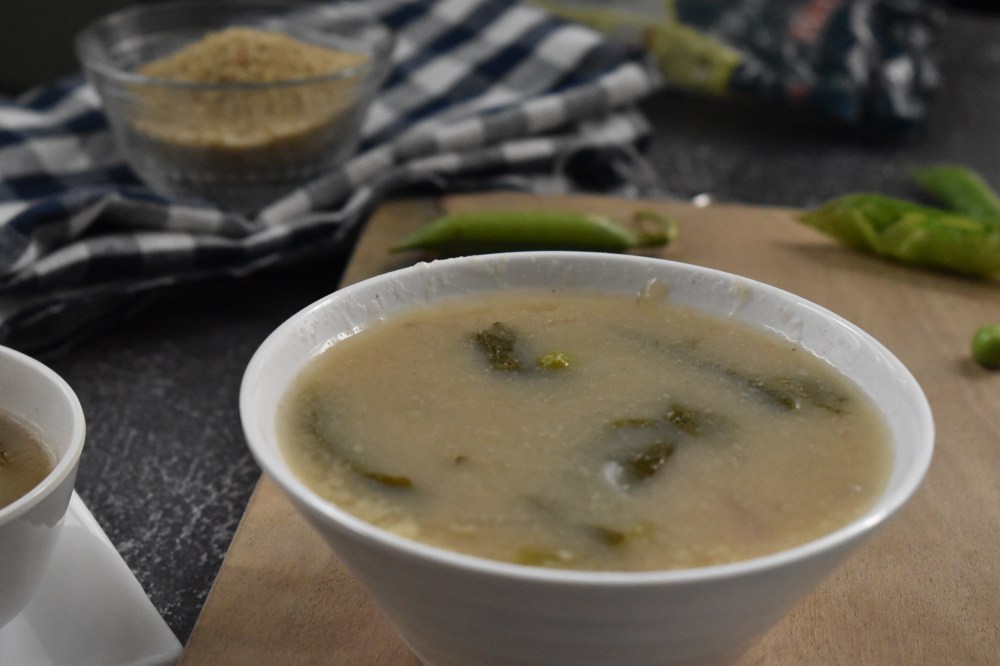
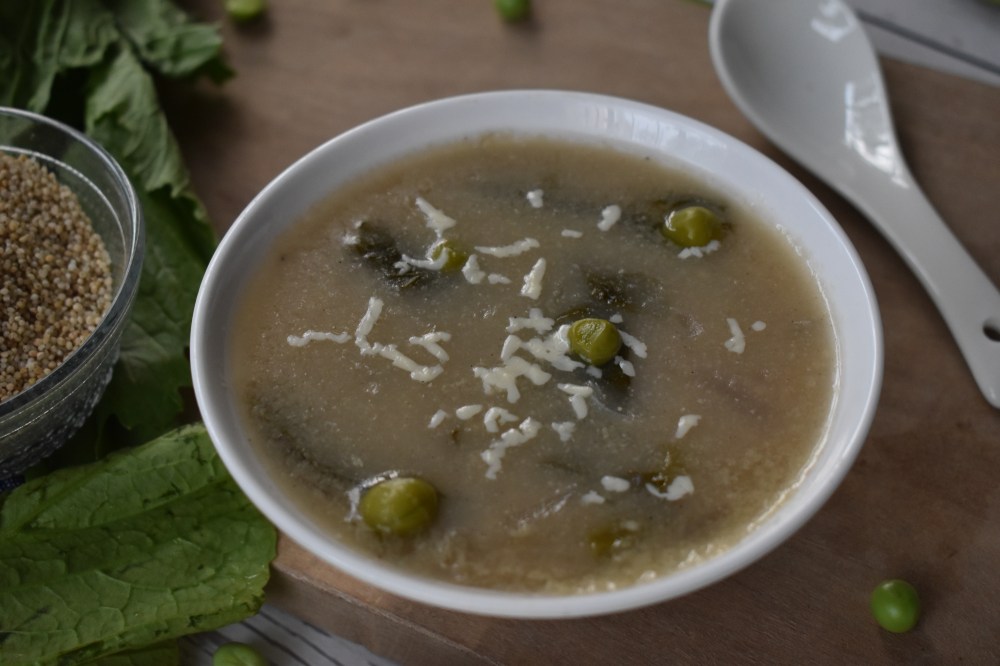
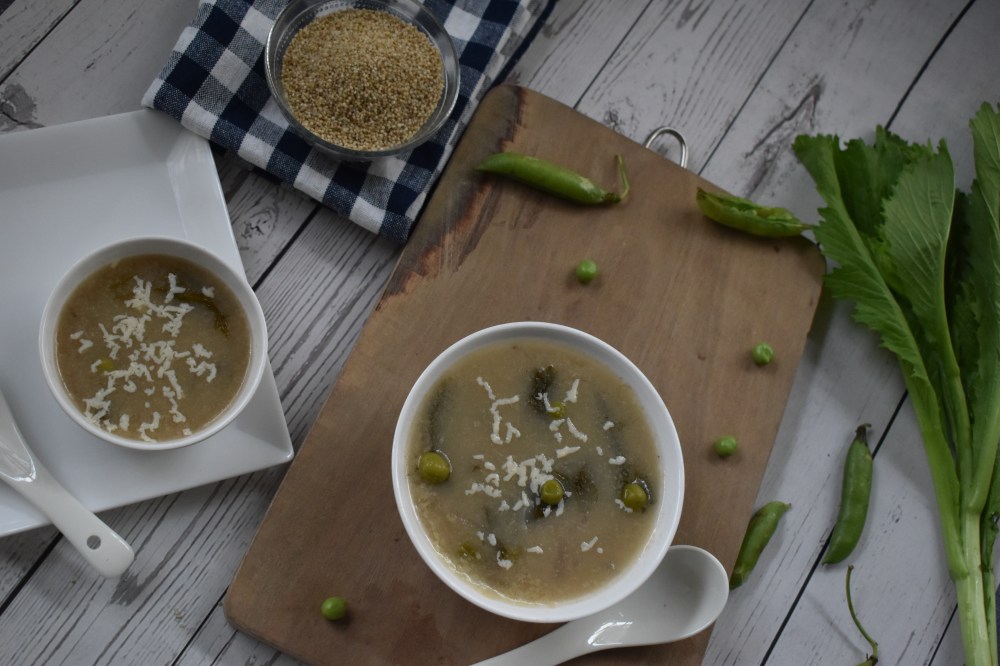
- Switch off the flame & serve your ready to be relished, creamy & delicious soup.
- Top it with some grated cheese and some more sprinkling of freshly ground black pepper and enjoy this warm, comforting creamy delight to beat the chills in winter.
Courtesy :
- https://en.wikipedia.org/wiki/Millet
- https://www.britannica.com/plant/millet-plant
- https://www.webmd.com/diet/health-benefits-millet
- https://vikaspedia.in/health/nutrition/nutritive-value-of-foods/nutritive-value-of-cereals-and-millets/milletsthe-nutricereals#:~:text=for%20celiac%20patients.-,Nutritional%20Composition%20of%20various%20types%20of%20Millets%20with%20their%20Local,15%2D20%25%20dietary%20fibre.
Discover more from FOODIESTREASURE
Subscribe to get the latest posts sent to your email.

 FOODIESTREASURE
Very healthy dish…well shared!
LikeLiked by 1 person
Thanks !🙏
LikeLike