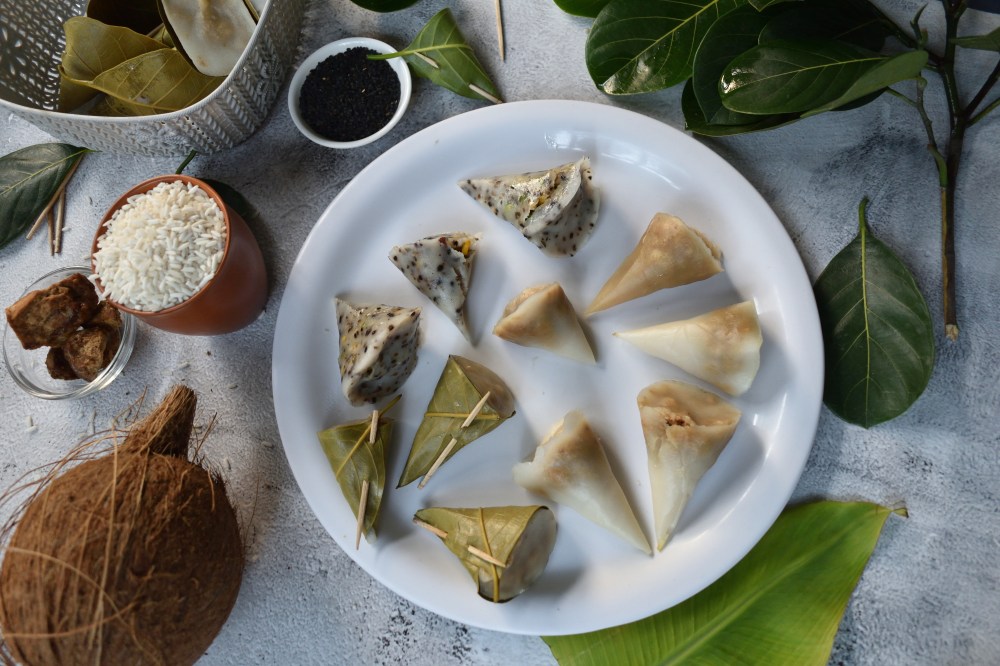
This is Poush Parbon or Bhogali Bihu once again and the best way to celebrate the festival is to indulge yourself in the enjoyment of making and savouring delicious Pitha(s), the traditional sweetmeats or savouries with rice as an important ingredient along with other additives like jaggery, sesame seeds, coconut, lentils, sugar, cream, milk etc. which are made throughout the east and northeast of India in a number of varieties. Pitha making had been a practice which i had experienced since my childhood on the occasion of makar sankranti which is known as magh bihu or bhogali bihu in Assam. I grew up seeing my grandmoms, both paternal and maternal too much preoccupied with making pithas during this occassion by staying awake late in the midnight & rustling up a full platter of pithas both sweet and savouries for the special breakfast in the morning of Makar Sankranti as well as for day long snacking for entertainment of the family members & guests. While they used to make piping hot pithas, they would allow us especially their beloved grandchildren to take a bite or two and tell them the taste. Now and then they would offer some samples to taste to the family members to tell them if any improvisation was required. After them, I have also seen my mum and aunt to do the same and I guess it is indeed similar in almost every household here. These freshly made piping hot pithas are really divinely delicious. Although the taste is no less the next day but the pithas straight from the flame are just incredibly delicious.
“Pithe puli” or “Pitha cheera” had been an important component of Poush Parbon or Makar Sankranti and we wait with baited breath for the time to arrive after a year long gap. Even though the festival starts on the day of Makar Sankranti or on its eve in the night before it, yet the festival of feasting continues week long when we distribute and exchange pithas to our loved ones, friends or carry them for our colleagues at work. Even talking about food becomes our priority at work and every moment feels festive.
As you know now, most of the pithas have rice in it, we are baffled to see that in how many ways the rice could be prepared. Rice batter or rice powder is given so many forms like in dumplings, pancakes, steamed or fried either as sweets or as savouries which are usually not so common during other times of the season. India is a huge country with so many states that have rice as their staple and most of them celebrate their harvest since ancient times with a variety of rice based dishes. Every rice eating state in India have their own riced based dishes and many dishes have stark similarity as if all have originated from the same roots. As for example, the kozhukatai of tamilnadu, modak of maharashtra, sheddho pitha of bengal, mohura pitha of assam, patoli of odisha, Holle of goan or many such steamed rice cakes of eastern and northeastern india are quite similar in their preparation or techniques. On seeing these dishes you feel that a similar technique has been followed and changes were made in due course based on the ingredients, equipments or resources available to them.
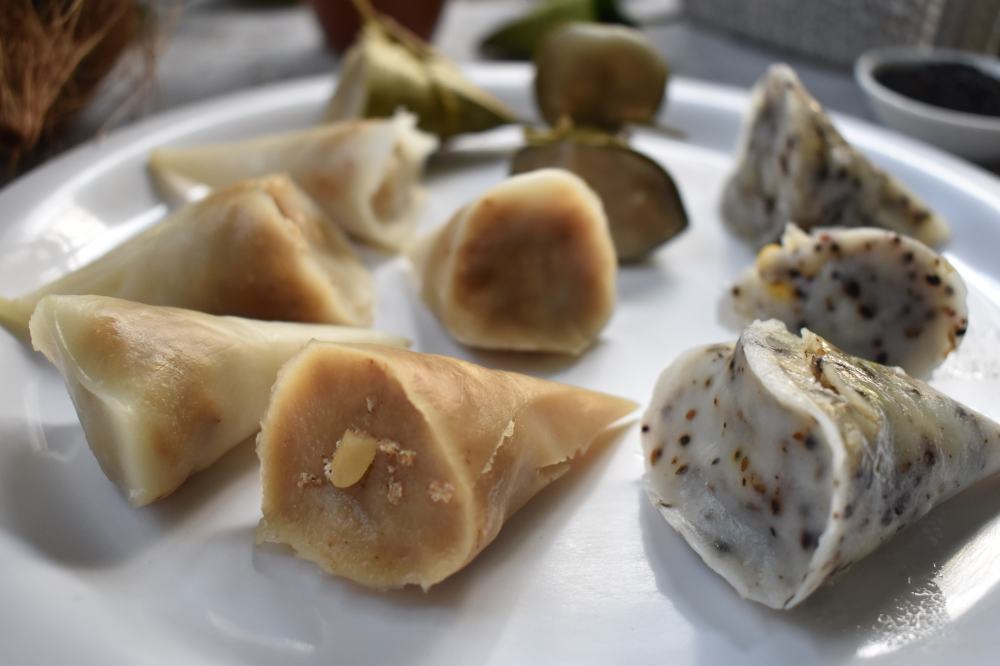
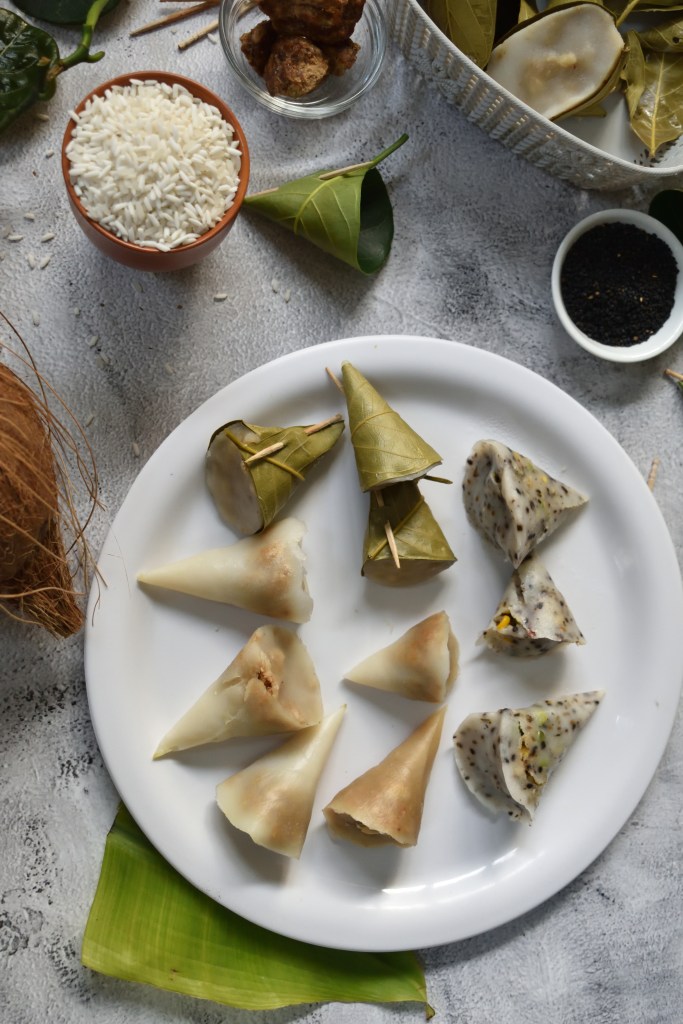
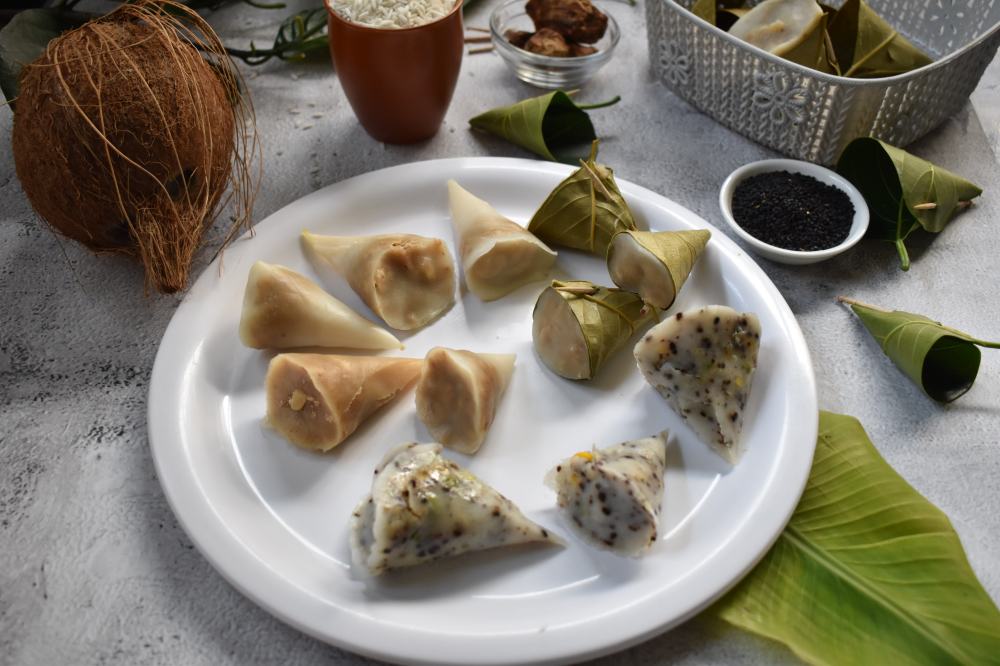
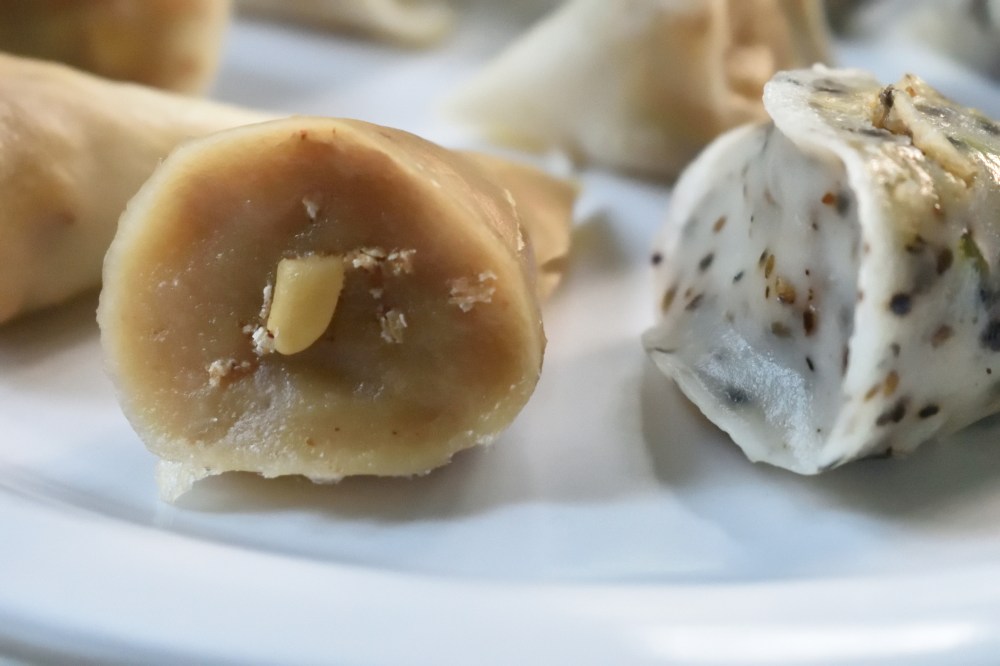
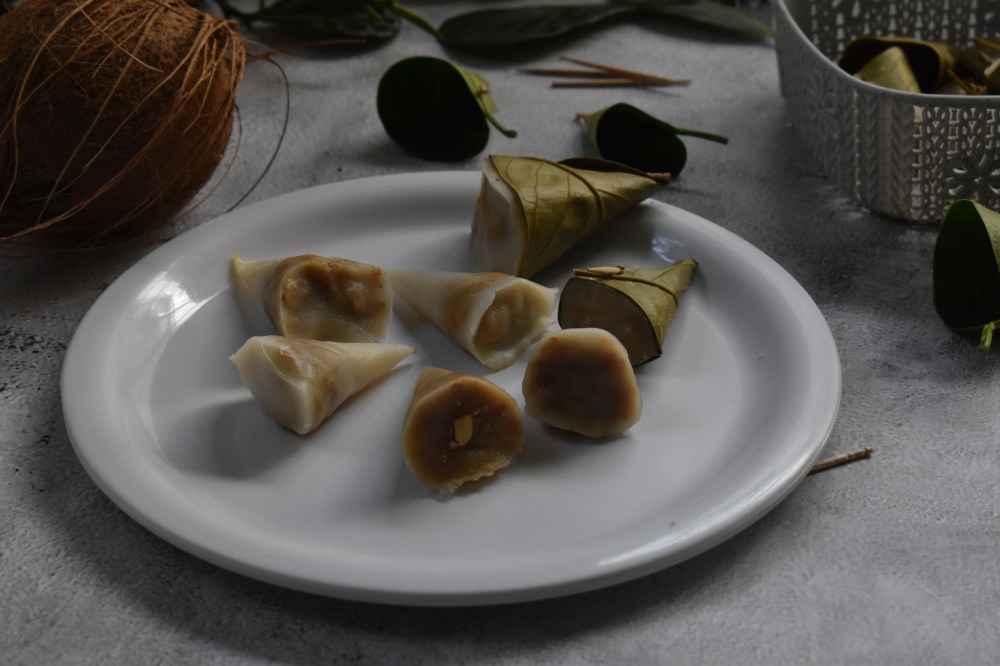
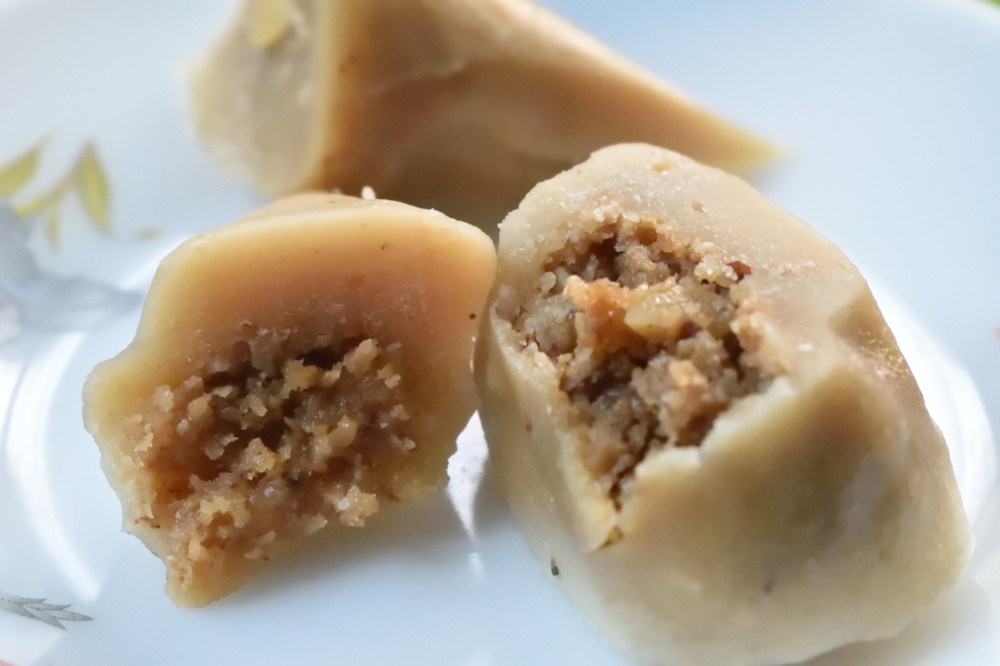
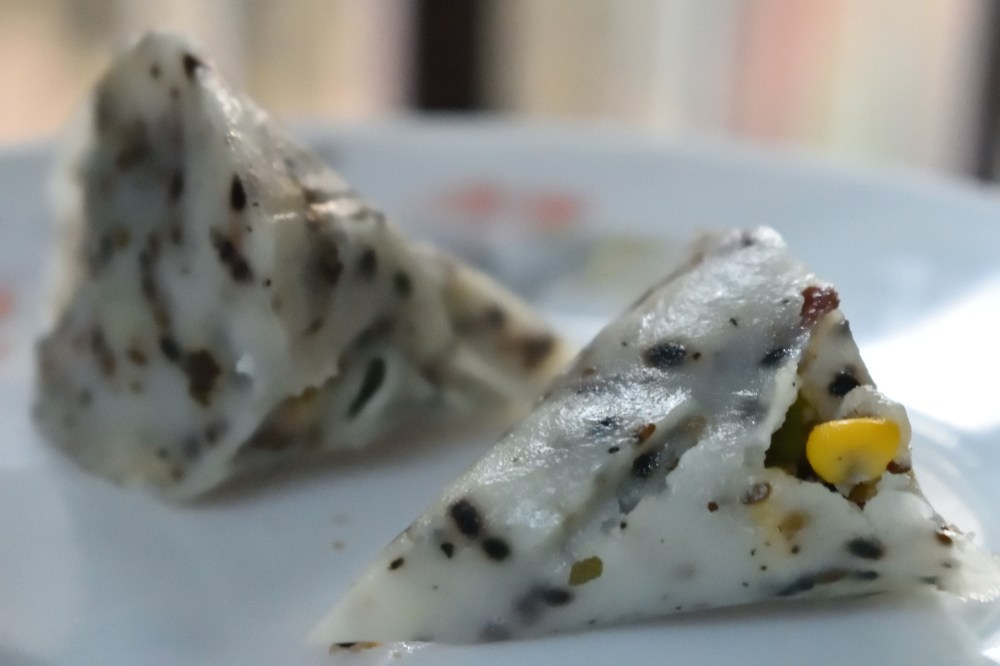
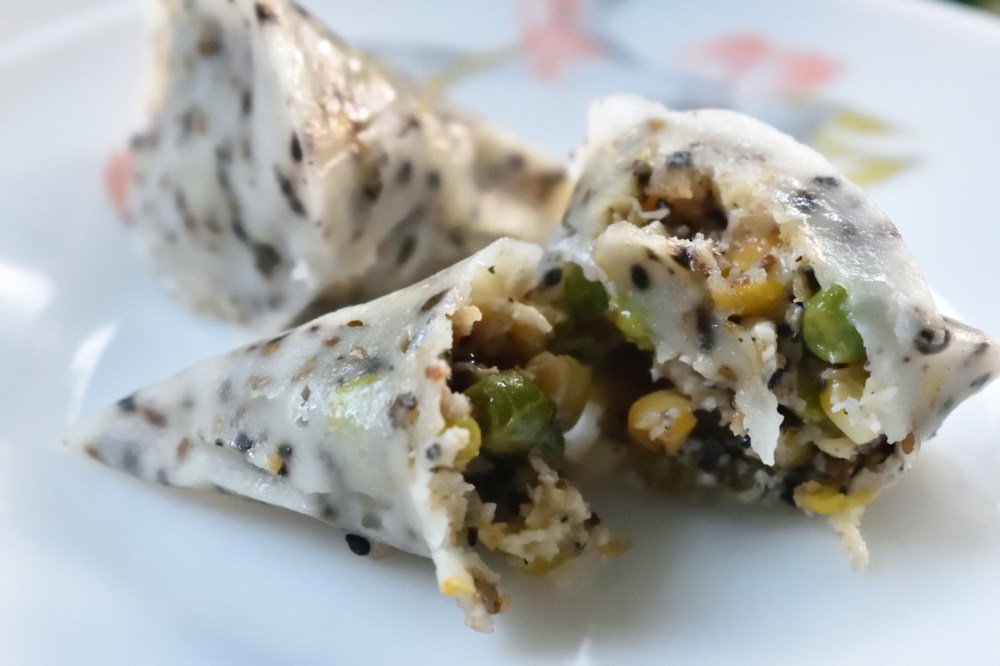
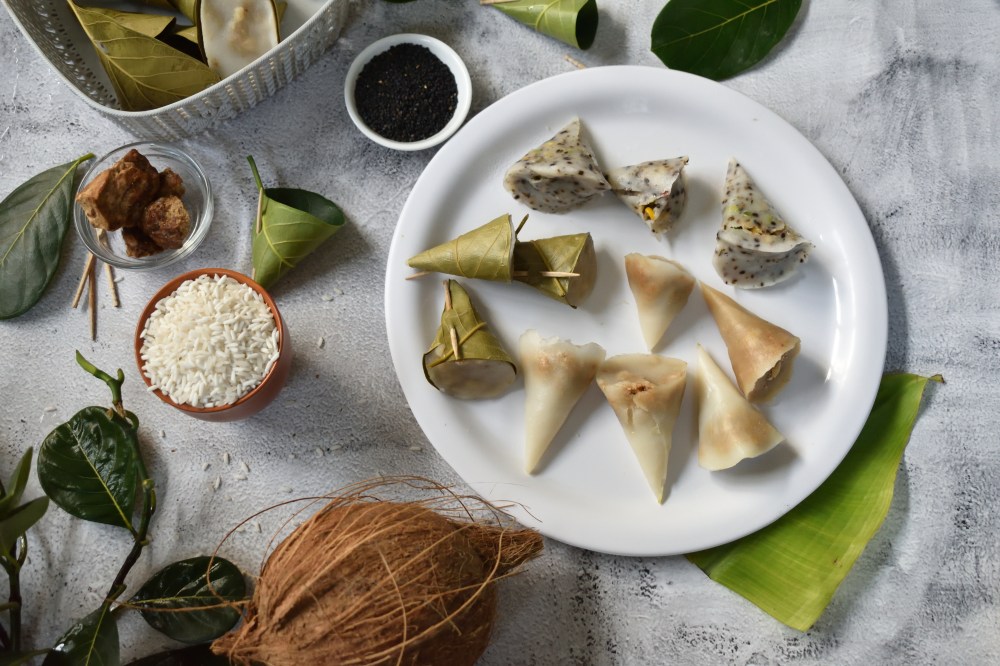
Once, I had came across the Goan holle or Idiyo in an awesome instagram video of MuchFoodGoa (video link given at the end of the page) which seemed quite interesting and I tried to find more about it & discovered that it is quite similar to our Pitha(s) which they usually prepare for their special occassions or any celebration like christmas. From that time I had a wish to replicate it somehow. Since, now it is pitha making time again, I thought why not make this as one of our pithas this time in our platter. It suited really well and was quite easy and interesting to make. It can be easily modified into the way you like by making the filling of your choice, either sweet or savoury and even playing with its shell by infusing spices or ingredients into it or colouring your batter. I have prepared a sweet and a savoury version of my holle. The sweet one has been slightly bengalised by using the most sought after ingredient in Bengal during the winter season which is the nolen gur or date palm jaggery and the savoury one has been made interesting by adding cheese and roasted black sesame seeds into it as sesame seeds are a symbolic of makar sankranti across India.
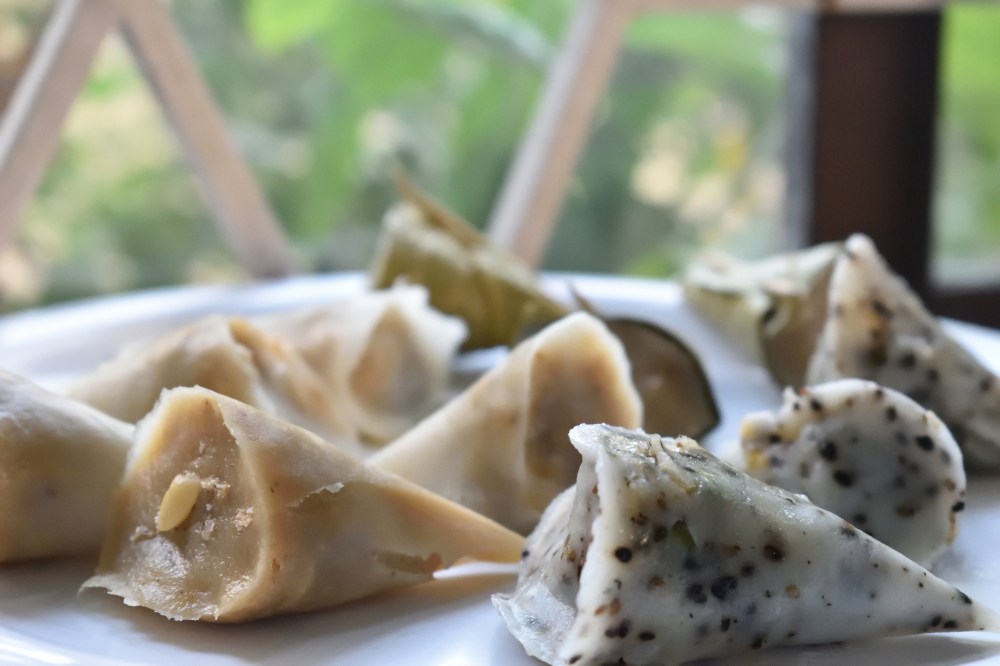
So, if you want to try making this interesting, slightly modified goan holle style bengali pitha and a fusion savoury, follow the recipe here👇:
RECIPE:
Ingredients:
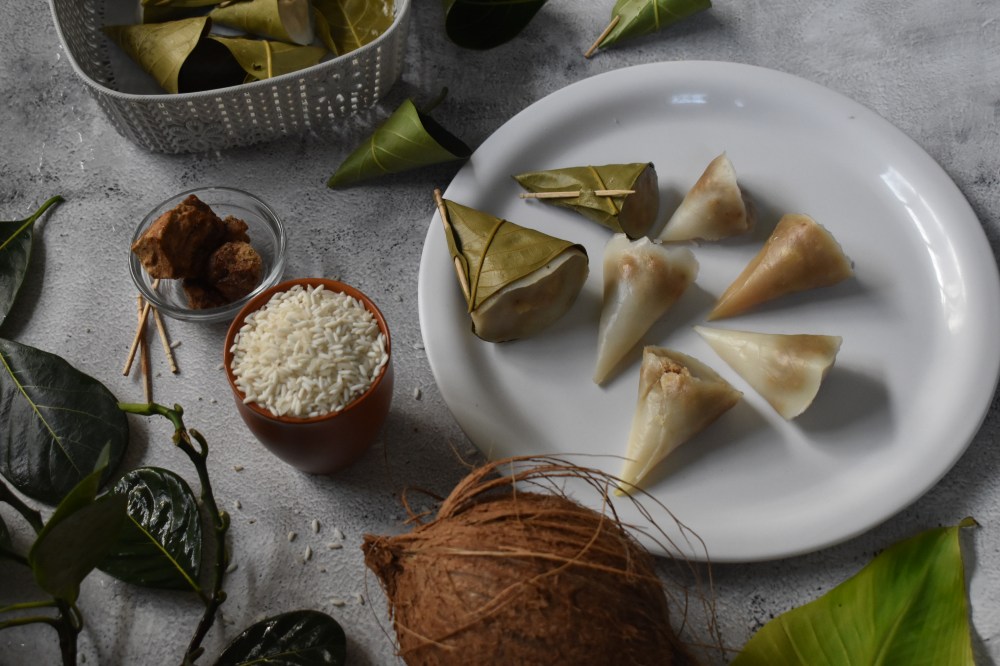
- Parboiled rice – 1.5 cup.
A) For Sweet Version. - Date Palm Jaggery – 2 to 3 tbsp. or as per requirement.
- Coconut (freshly grated) – 1/2 cup.
- Cashews (chopped) – A few.
- Khoya (grated) – 1 tbsp.
B) For Savoury Version - Coconut (freshly grated) – 1/2 cup.
- Corn and green peas (boiled) – 1/2 cup.
- Sesame seeds (dry roasted and partially crushed) – 1 tbs.
- Green chillies (finely chopped) – 1 or 2.
- Cheese (grated) – 1 cube.
- Refined oil – 1 tsp.
- Dry red chilli – 1.
- Black Mustard seeds – 1/2 tsp.
- Curry leaves
- Salt – to taste
- Sugar – 1/4th tsp.
Other Requirements:
- Jackfruit tree leaves.
- Toothpicks.
Preparation:
- Soak rice for at least 5 hours or overnight.
- Grind the soaked rice with a pinch or two of salt with little water to make a smooth paste. (Note:- The consistency of the paste or batter should neither be too thick or too thin).
- Take the jackfruit leaves, wash and keep them thoroughly and keep for drying. (Note: You may also use banana leaves instead).
- Take one leaf, make cone out of it by folding the two sides and bringing them together and sealing them with the help of toothpick.
- Preparation of the fillings.
A. For sweet filling:
i. Melt Khoya in a wok or kadhai.
ii. Add jaggery and mix over a low flame until everything blends together completely over.
iii. Add chopped cashews and mix.
iv. Switch off the flame and bring down the mixture.
B. For savoury filling:
i. Heat oil in a pan, add red chilli and saute till it becomes dark.
ii. Add mustard seeds and let them splatter.
iii. Add grated curry leaves and saute.
iv. Add grated coconut, corn, peas and mix everything together over a low flame.
v. Add green chillies and sesame seeds and saute to mix.
vi. Lastly, add grated cheese, slightly toss and bring down from flame. Your savoury filling is now ready. - For preparation of the rice coat or cone, divide the ground rice batter in two parts for preparing the sweet and savoury separately.
- For the part used for preparing savoury ones, add some of the dry roasted and slightly crushed sesame seeds to the batter and mix nicely.
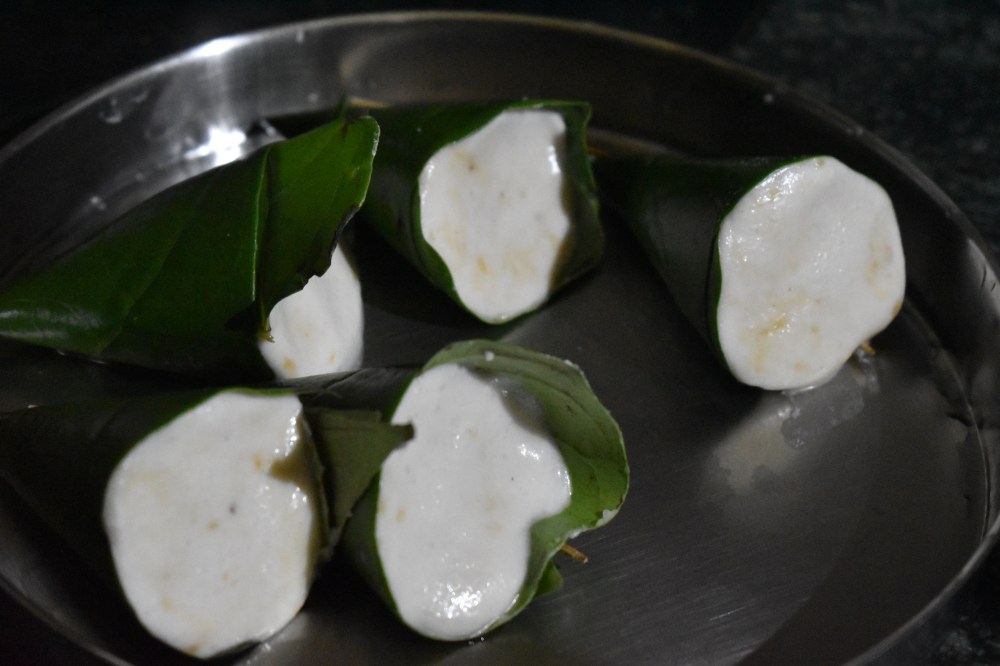
- Now for preparing the cones, take a pinch of the batter and put it in the extreme pointed end of the leaf cone. Take little more of the batter and spread it uniformly along the sides to cover it entirely, so that no gaps remain. The batter should uniformly spread over the walls of the cone ( Note: The coat should not be too thick, as it may affect the taste or it should not be too thin, otherwise it may get cracked after steaming).
- Take some amount of the filling and put inside the coated hollow of the cone to fill it completely.
- Add some more amount of the batter and cover the filling with it by spreading uniformly over the filling and sealing the sides of the rim, so that no stuffing is visible.
- Fill the remaining cones in similar way.
- Preheat your steamer or you may simply use a pan with a lid and fill 1/3rd of the pan with water and put a stand over it.
- Now, close the lid and let it boil over a high flame for the steam to start coming out.
- Now, bring down the flame to medium and put the cones in a bowl or any other container to place it over the stand and cover with the lid. {Note: make sure that the water do not reach your cones, as it may spoil your pitha(s)}.
- Let it steam for 20 minutes over a medium flame.
- After 20 minutes, switch off the flame, open the lid and wait for few minutes to touch your Holle(s), as they are too hot now.
- When the temperature is bearable, take out the cones in a dish or tray.
- Pull out the toothpick and unwrap the cones from the leaf.
- Your hot piping hollas are now ready to be gorged on accompanied with some kind of chutney(s) like coconut chutney. Pair it with a hot cup of tea and enjoy the ecstatic moment.
Courtesy :
1. https://www.instagram.com/reel/C27OtQ3tSyu/?igsh=dzhqeGpsNm5ocWxr
Discover more from FOODIESTREASURE
Subscribe to get the latest posts sent to your email.

 FOODIESTREASURE