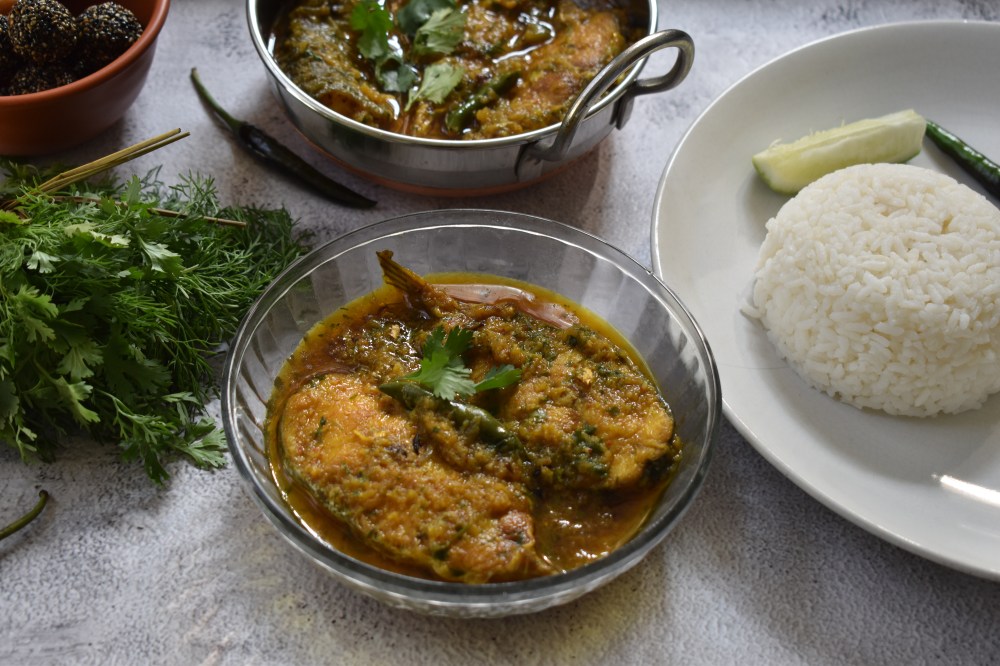
Wish you all a happy Makar Sankranti/Bihu/Pongal/Lohri/Uttarayan !
Makar Sankranti, the first harvest festival of India in the new year has arrived, which is a holy and auspicious day throughout the country with different regional names like Bihu, Poush Parbon, Pongal, Bhogi, Lohri, Uttarayan, Uzhavar Thirunal, Haldi Kumkum, Maghi Sankranti, Hangrai and so on. Since this is a harvest festival, this is more or less a feasting fiesta all over the country with a wide array of pitha(s) in the east, pongals in the south, and til and rice preparations in the west and north of India. In Bengal, be it West Bengal or the erstwhile East Bengal i.e. the Bangladesh, the festival is called the Poush Parbon or Poush Sankranti, which means the end of the month of Poush and its transition into the month of Magh in the Hindu Calendar. This particular Sankranti, which means the end of a particular month and its transition into a new month is a very significant day in the Hindu traditions since very ancient times of Indian civilization when indian subcontinent was inhabited by the native dravidian people before the emigration of indo-aryans here, when people used to pay obeisance after their good agricultural harvest to the Sun and Fire god, the major gods being worshiped at that time before other hindu gods were identified. At that time, it has become customary to get up early before the break of dawn, take bath in the rivers or tanks and do bonfire soon after the sunrise to pay obeisance to the Sun and the Fire by offering grains and food into the fire. In Assam, the night before the Makar Sankaranti is known as Uruka, the day of community feasting where families and communities gather around bonfire during night in and around the meji(s) or bhela ghar(s) synonymous with the Mera Merir Ghar(s) in the bengali dominated barak valley districts of Assam, the former is a structure built of logs of wood or bambo placed tier above tier to rise to a considerable height and covered fully with straw forming a tall temple like structure and the latter two are makeshift structures for a communal feast, a hall or a hut or a tent made up of thatch, bamboo, straws and other natural materials for the night for rejoicing inside and burning them the very next morning. The Uruka feasting usually include an elaborate spread comprising of daal, vegetables, fish, meat and egg based dishes for a three course meal including starters, the main course and followed by a dessert sometimes. The next day is the ritual to lit those makeshift structures i.e. the meji(s) and bhelaghar(s) after taking bath early in the morning and again gather around the fire to offer prayers to god and then beginning the daylong feasting once again, gorging on an elaborate spread of special delicacies on the occasion that comprise a variety of pitha(s), larus, sira, doi and a lot more, which used to be prepared with fresh harvests earlier.
We Bengalis also share a similar way of celebrating this festival of feasting where a wide variety of confections called pitha(s) and porridge or payesh are prepared on the previous day for the next day’s feasting along with some of the special preparations that are usually relished in the meals during this time of Poush Sankranti. After lighting the mera merir ghar & paying obeisance to God in the morning, we mostly enjoy an elaborate spread of pitha(s) that often continues all day long and concludes with some spicy curries during the meals like lau macher matha, mulor shutki, boal macher jhaal & shorpora to name a few. Bengalis, except a minority who are strict vegetarians or are constrained to do so, usually celebrate their joyous moments definitely feasting on some or other kind of these mouth watering non-vegetarian preparations. Freshly caught fishes from rivers and ponds are preferred for the festival, which are usually bigger in size and are suitable to be enjoyed more in a group rather than in a small family. In any usual bengali celebrations,say a marriage in the house or Bijoya Dashami, Poila Boishakh or Sankranti, it is considered auspicious if a good fish is cooked in the house. There are a huge variety of fishes loved by the Bengalis, of which some are considered little classier than the others due to their high demand in the Bengali households rated on either their deliciousness, richness, uniqueness, availability or the amount of edible flesh e.g., Rohu/Rui, Catla, Hilsa/Ilish, Chitol, Boal, Aar, Pabda and Chingri are some of the fishes considered as delicacies. Now since this is Makar Sankranti, the occasion is also befitting for a delicious Shor pora Boal Machher Jhaal or a stored Boal Fish curry which is usually cooked in the previous night in our house and kept untouched for the next day. The chilling winter brings some uniqueness and flavour to the usual boal macher jhaal in which the gravy condenses in the cold temperature due to the oil present in the fish giving it a thick gelatinous texture which can be well compared to a cream or malai that condenses in the milk and so named as shor pora, where shor means malai or cream in bengali.
Boal Fish in bengali (Scientific name: Wallago attu), is known as Helicopter Catfish in English, is a kind of big fresh water catfish which is predatory to other fishes in nature and are found primarily in the large rivers and fresh water lakes in the South and Southeast Asia. This catfish was being used as food in the Southeast Asia since ancient times. In the east and northeast of India, especially in the riverine plains of Bengal, Assam and Tripura, this fish is quite commonly found and is also quite popular as food. This Helicopter Catfish is called Borali in Assamese and Attu Vaala in Telugu.
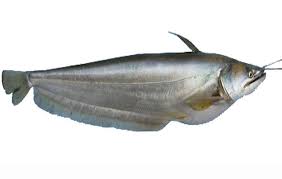
(Courtesy : https://www.roysfarm.com/boal-fish-farming/)
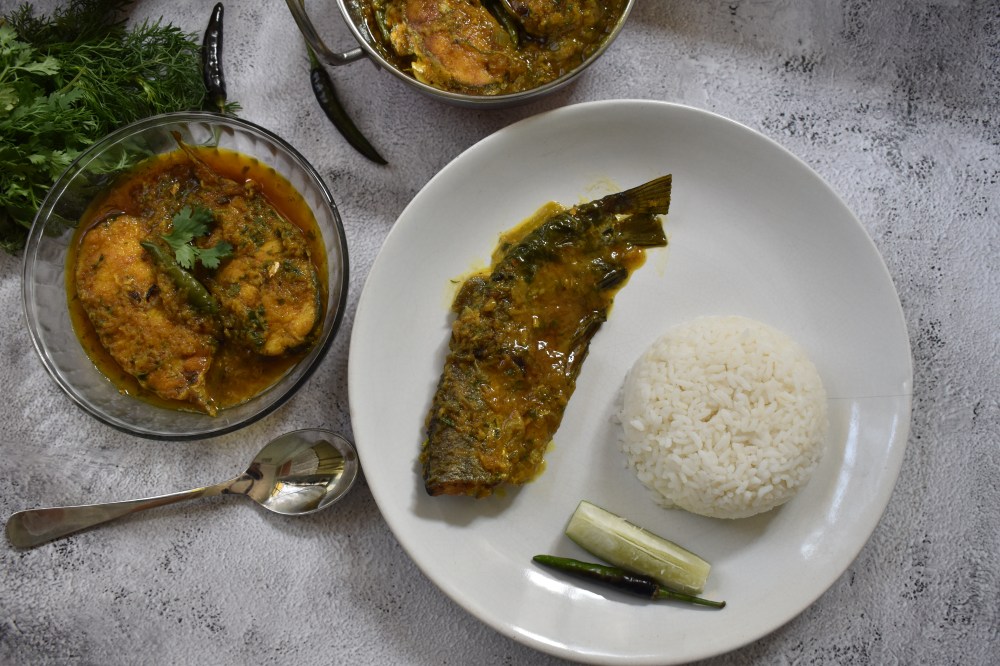
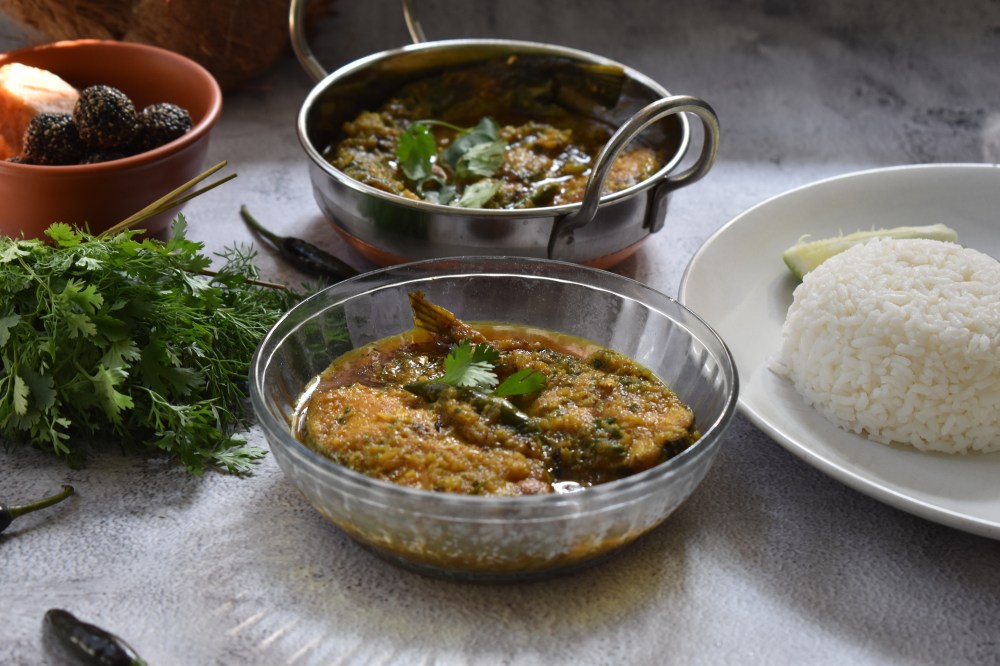
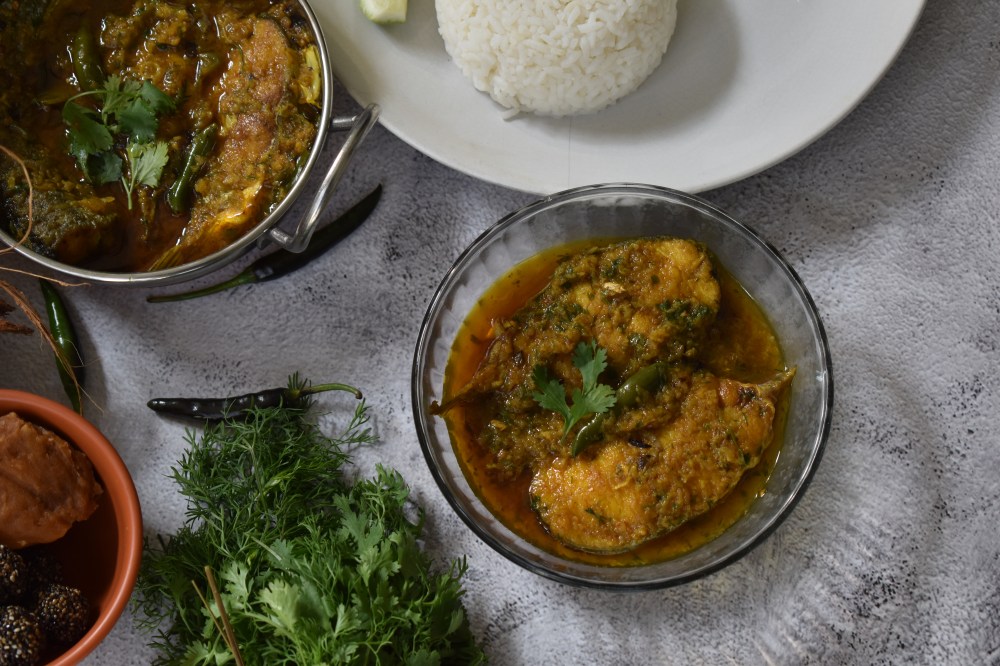
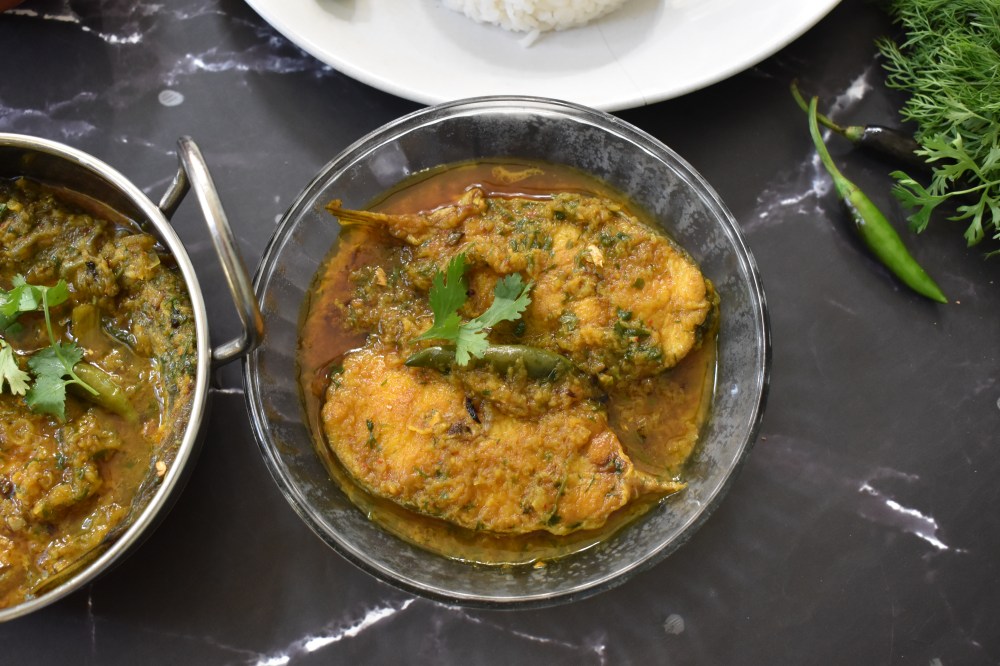
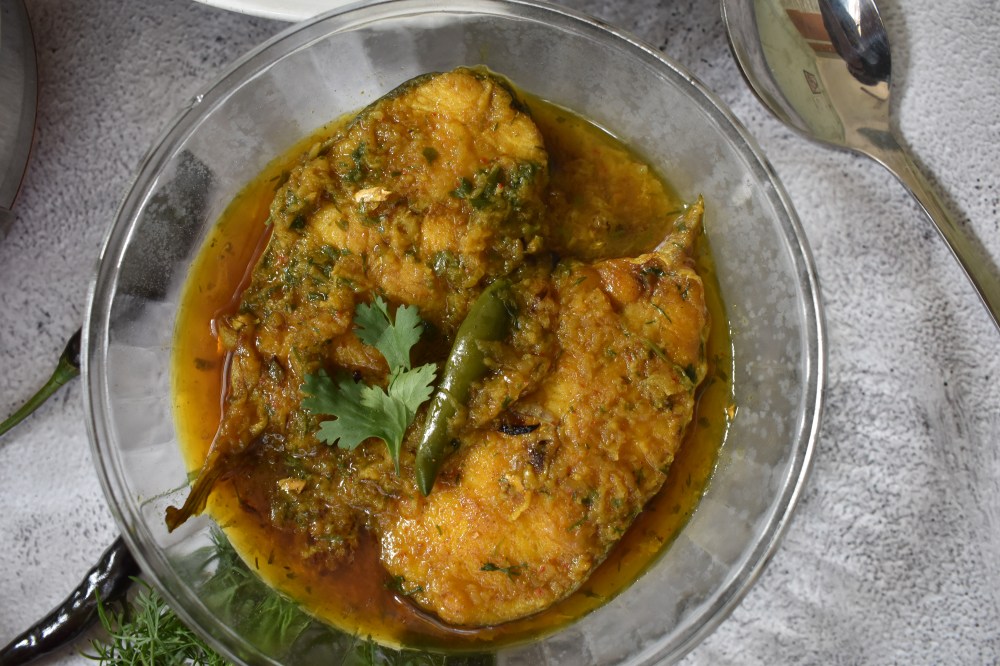
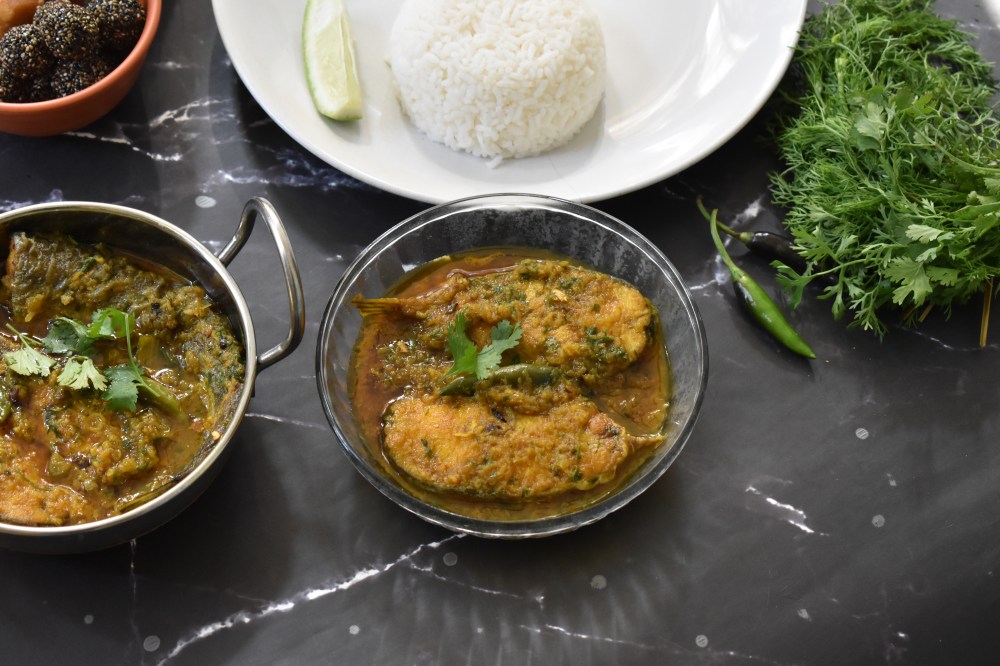
On the day of Makar Sankranti, as the whole day usually passes by feasting on pitha(s), payesh and so many delicacies, most of which are sweet except a few. After this day long bingeing on sweetmeats, we long for something like a hearty meal of cooked rice and a salty, spicy fish curry in the night in our household and Maa mostly prepares this awesome fish curry during this time every year which we grew up eating. So here, I am sharing my mom’s recipe of this luscious Boal macher shorpora curry & hope you are surely going to enjoy it. You may like to know the recipe which goes as follows :
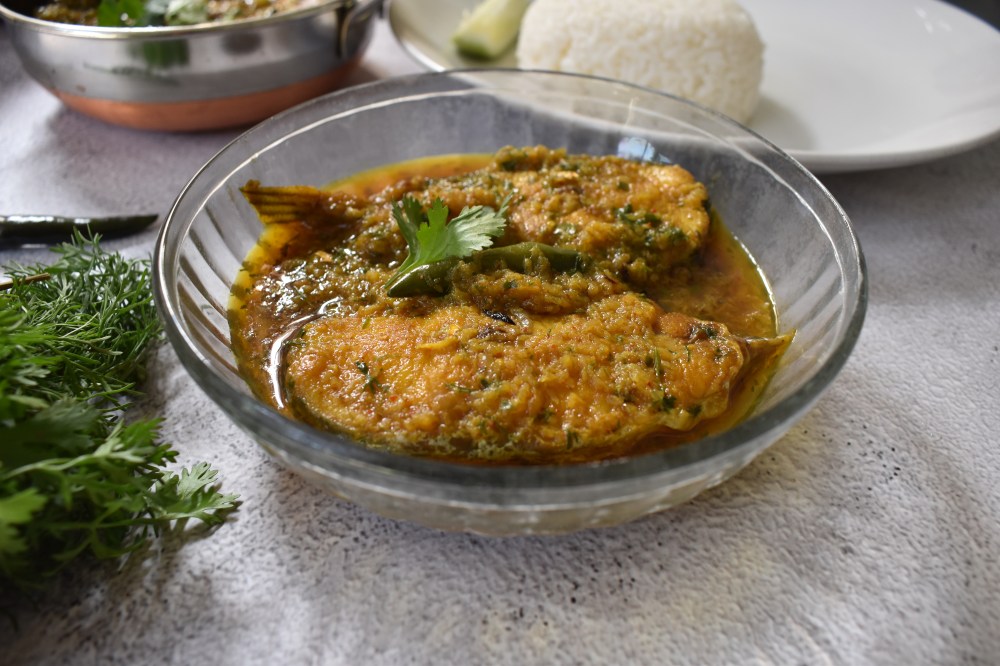
RECIPE :
Ingredients:
- Boal Fish (cut into pieces, washed and cleaned) – 5 to 6 pc.
- Onion (paste) – 2 medium sized.
- Onion (chopped)– 1 small.
- Ginger (paste) – 1 inch pc.
- Garlic (crushed) – 2 cloves.
- Green chillies (slit) – 4 to 5.
- Coriander leaves –
- Turmeric powder – 1 tsp.
- Red chilli powder – 1 or 2 tsp.
- Salt – to taste.
- Mustard oil – 3 tbs (for curry), 2 tbs (for frying).
Preparation:
- Heat oil in a kadai or wok.
- Fry the fish pieces slightly with little salt and turmeric powder over medium flame. Turn them carefully to fry on both sides. Do not fry for long as it will make the taste of the fish unpleasant.
- Bring down the slightly fried fish pieces from the flame and keep aside on a dish or a tray carefully to avoid breaking of the fish pieces.
- Again, heat oil in the same kadai over a low flame. (Note: You may use the remaining oil left after frying of fish pieces or use fresh oil after discarding the fish fried oil). I prefer using fresh oil as it reduces the raw odour from the fish in the curry).
- When the oil is hot enough, add the chopped onion and sauté for some time.
- Add 2/3rd of the ginger paste and sauté the mixture over a low flame till it turns golden brown.
- Add onion paste, crushed garlic, turmeric powder, salt and red chilli powder to the mixture and sauté them by mixing nicely over a medium flame.
- Add green chillies and again sauté for sometime till the mixture is perfectly cooked and the oils starts separating from the mixture.
- Add the fish pieces to the mixture and bring down the flame to low.
- Now very carefully, toss and turn the fish pieces in the sauteed spice mixture so that the mixture gets nicely infused/absorbed in the fish pieces. Fishes are very delicate in this stage and should be handled very carefully for preventing breakage. So, you may simply hold and shake the kadai instead of using the ladle.
- Add the desired amount of water to the mixture to make the gravy which should be neither too thick nor too runny.
- Add coriander leaves and bring the mixture to a boil.
- Simmer for another 2 to 3 minutes and switch off the flame.
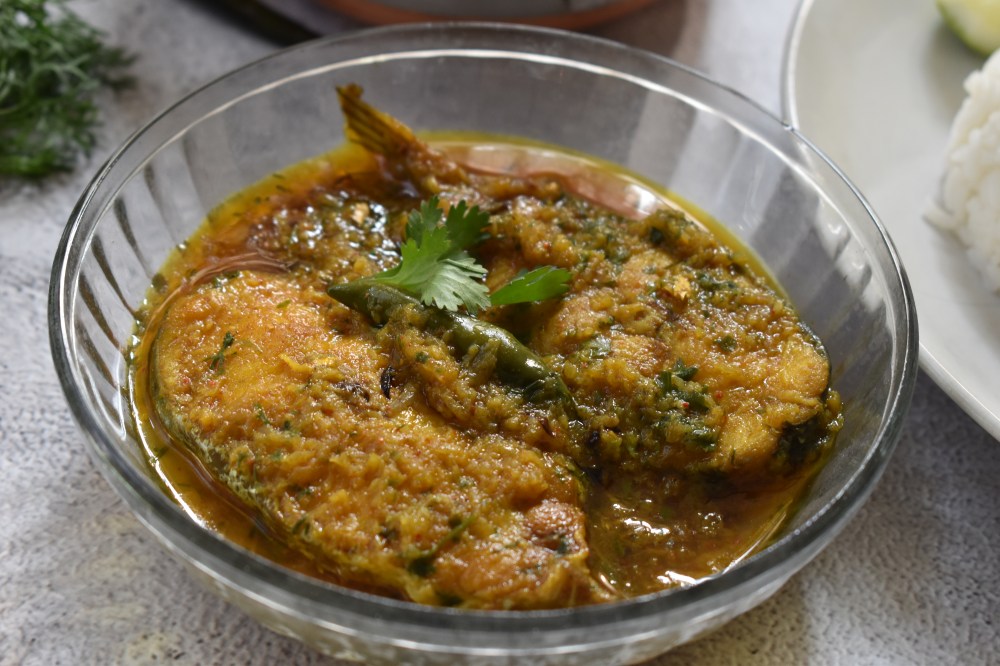
- Your yummy boal machher jhaal is ready to be served with piping hot steamed plain rice.
- For relishing the extra/real delight of shorpora with piping hot rice or garam bhaat, you have to wait overnight and let the curry settle down with a thick gelatinous consistency in the next morning. For this you have to keep the curry covered as it is if the weather is too chilling or else you have to put it in the refrigerator for it to be set for overnight.
Do try this delightful fish curry in this chilling weather with freshly steamed piping hot rice and share your unique experiences in the comments section below.
(Source : https://en.wikipedia.org/wiki/Wallago_attu)
Discover more from FOODIESTREASURE
Subscribe to get the latest posts sent to your email.

 FOODIESTREASURE
Looks delicious!
LikeLiked by 1 person
Thank you so much !
LikeLiked by 1 person
Delicious recipe of Boal fish 👌
LikeLike
Thank you so much..do try once.
LikeLiked by 1 person
Yes.
LikeLiked by 1 person