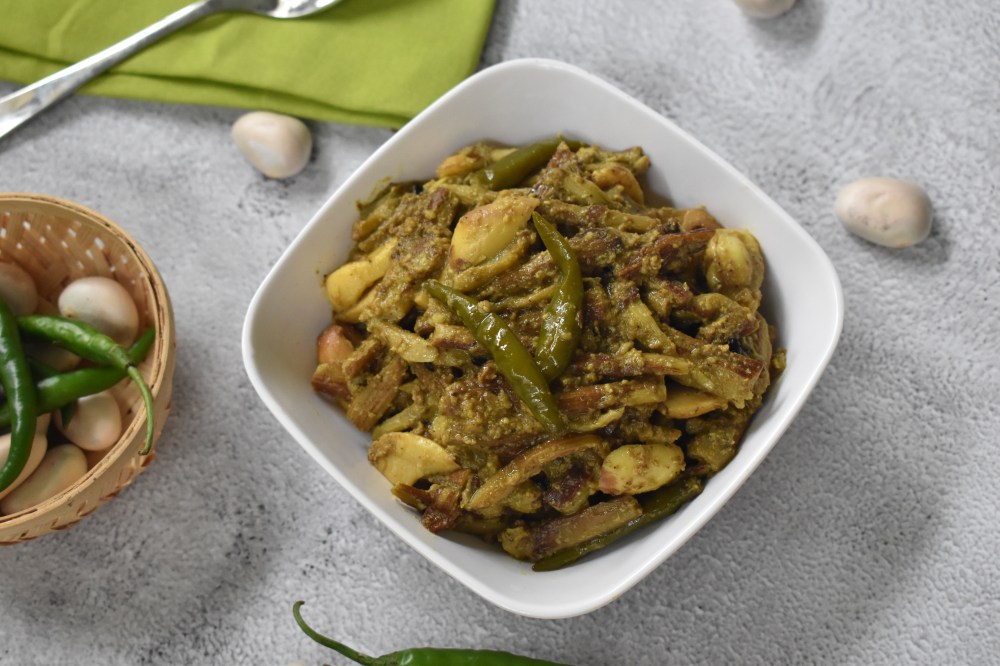
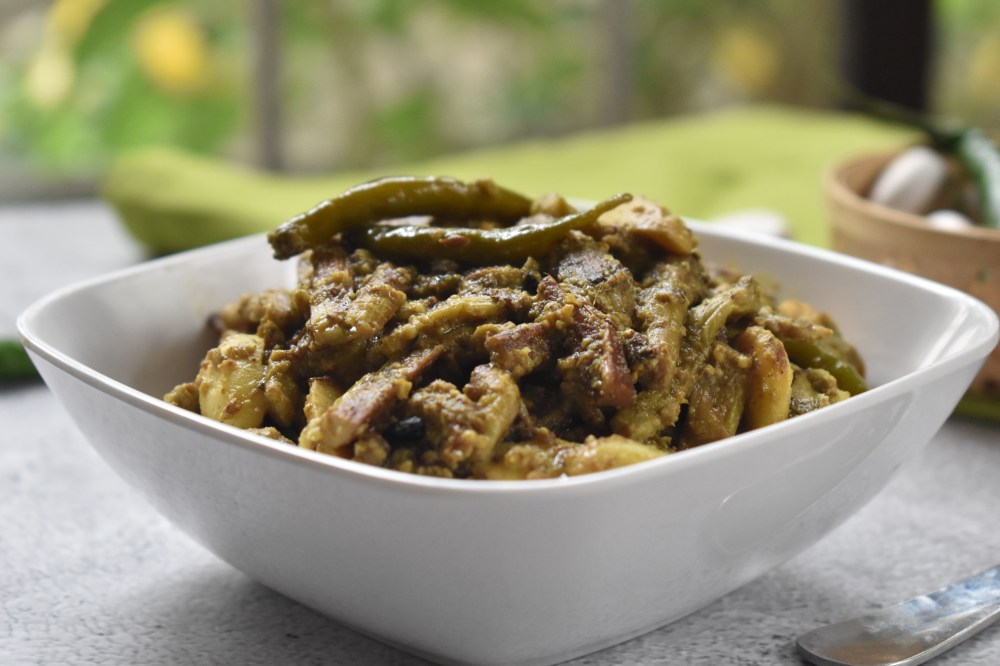
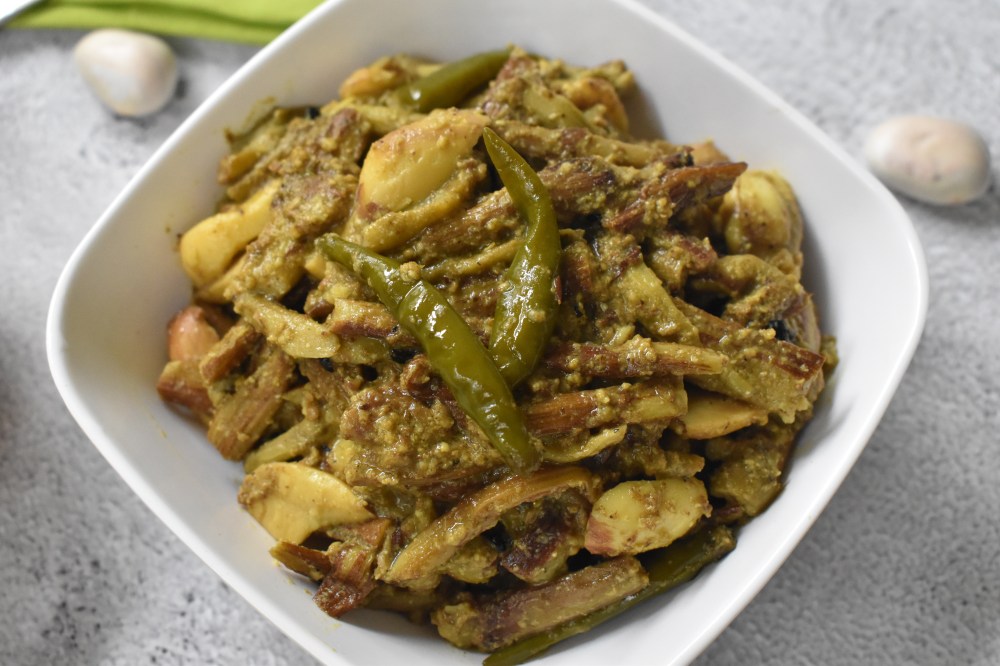
Since my childhood days until now, in the rainy season during the monsoons, my father certainly brings home taro stolons especially for my mother from the daily or weekly markets, when it becomes available in plenty, as this is one of her favourite items. She has different recipes with this healthy and tasty ingredient, be it vegetarian or non-vegetarian with dried fish or prawns. Every dish from this wonderful ingredient tastes just incredible, especially the vegetarian ones which are more in number and more interesting for me to cook. I too fall for this super delicious vegetable cooked in just any preparation whether it is steamed, put together into a vegetarian curry or made with fermented dry fish (shidol). One of the vegetarian recipes of my mom out of this is the Kochur lotir tok korua or the Taro stolons Tangy Dry Curry which she usually prepares with raw green mangoes during the season as its pairing with raw mangoes is just superb, as if the two ingredients are made for each other. However, you can also replace it with any other sour stuff like tamarind and use dried raw mango (aamchur) powder for the flavour of raw mango in it, which is easily available in stores.
Taro stolons, also known as taro cormels or taro runners, are a part of the taro plant (Colocasia esculenta) that is used for its propagation. Stolons are the creeping horizontal part of the plant that carries the roots of the plant thus helping in its expansion or propagation which are typically known as runners that runs beneath the soil surface. Colocasia is a widely used root vegetable and is the most widely cultivated species of the several plants in the family of Araceae. It is believed to be one of the earliest cultivated plants. They are mostly used for their corms, leaves, stems and petioles. Taro corms are a food staple in African, Oceanic, East Asian, Southeast Asian and South Asian cultures (similar to yams).
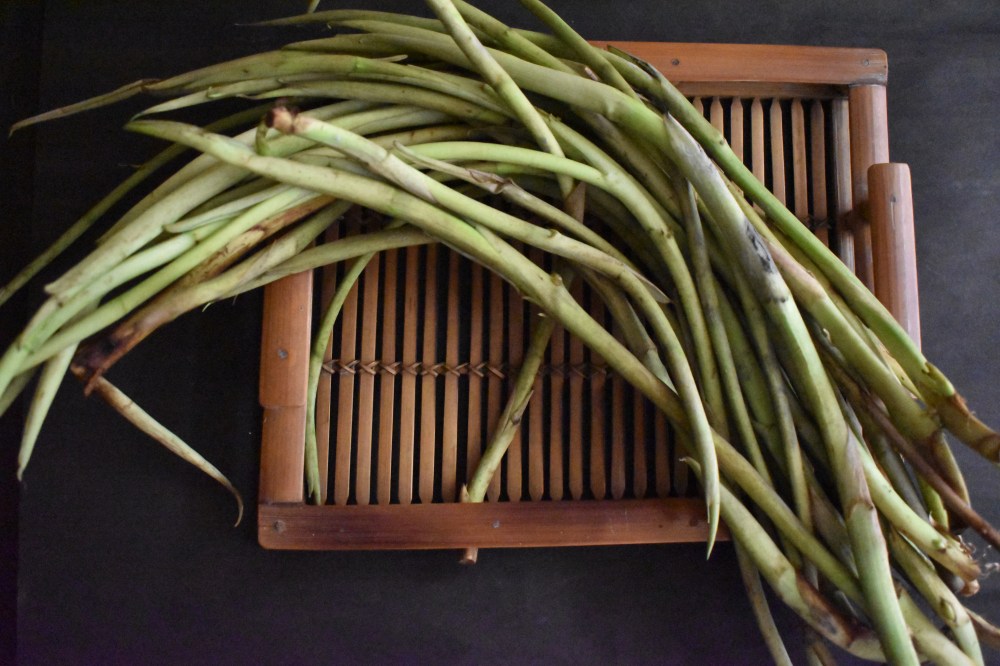
Taro stolons also known as Kochur Loti in Bengali contains in 230 g, 165 kilo calories of energy, Carbs: 26g, Fats: 6g & Proteins: 6g. They contain good levels of some of the valuable B-complex group of vitamins such as pyridoxine (vitamin B-6), folates, riboflavin, pantothenic acid, and thiamine. They are also rich in dietary fibres i.e. 100 g of its pulp contains 4.1 g or 11 percent of the daily requirements of dietary fibres, thus playing a vital role in protecting the digestive system. Along with slow digesting complex carbohydrates, the presence of adequate amounts of fibre in the vegetable helps maintain a steady rise in blood sugar levels. Taro stolon also helps to reduce high blood pressure. It protects the skin, prevents different types of cancer, increases circulation of blood, prevents heart diseases, improves vision, boosts the immune system, and strengthen the muscles and nerves. This wonderful food also prevents diarrhoea, cramping, constipation, bloating, excess gas, and improves the overall health of the body. Thus, Taro stolon is a very effective source of nutrients and vitamins for our health and overall wellness.
Since Kochur Loti or Taro Stolons are so healthy and so much delicious, and the rainy season is already in, I couldn’t stop myself from relishing its yumminess and thought of sharing one of my most favourite recipe with kochur loti which I really want you to try once. Although kochur loti is very common in bengali households during this season but there are innumerable preparations with it which are unique to every household. Other than bengal this vegetable is also well known in the India’s notheastern states with varied preparations. I am not aware if this awesome ingredient is also consumed in other parts of India or not. If anyone knows about or has eaten this item anywhere other than in the east or northeast of india, please let us know about that in your comments to this post. I want to share the goodness of this unique ingredient with you all who are still unaware of it. Have a look at the recipe below & give it a try :
RECIPE:
Ingredients:
- Taro stolon/Kochur Loti – 250 gm
- Mustard paste – 4 tsp
- Tamarind pulp/ boiled raw mango – 2 tsp/ 2-3 pieces
- Fenugreek seeds – 1/4th tsp
- Dry red chilli – 1
- Amchur powder (if using tamarind pulp replacing raw mango) – ½ tsp
- Mustard oil – 2 tbsp
- Turmeric powder – ½ tsp
- Salt – to taste
- Green chillies (slit) – 3-4
- Jackfruit Seeds (cut into halves & boiled) – 7-8 or as much you like Note : This is optional ingredient, you may skip it if you like or if unavailable.
- Sugar – 1/4th or to taste.
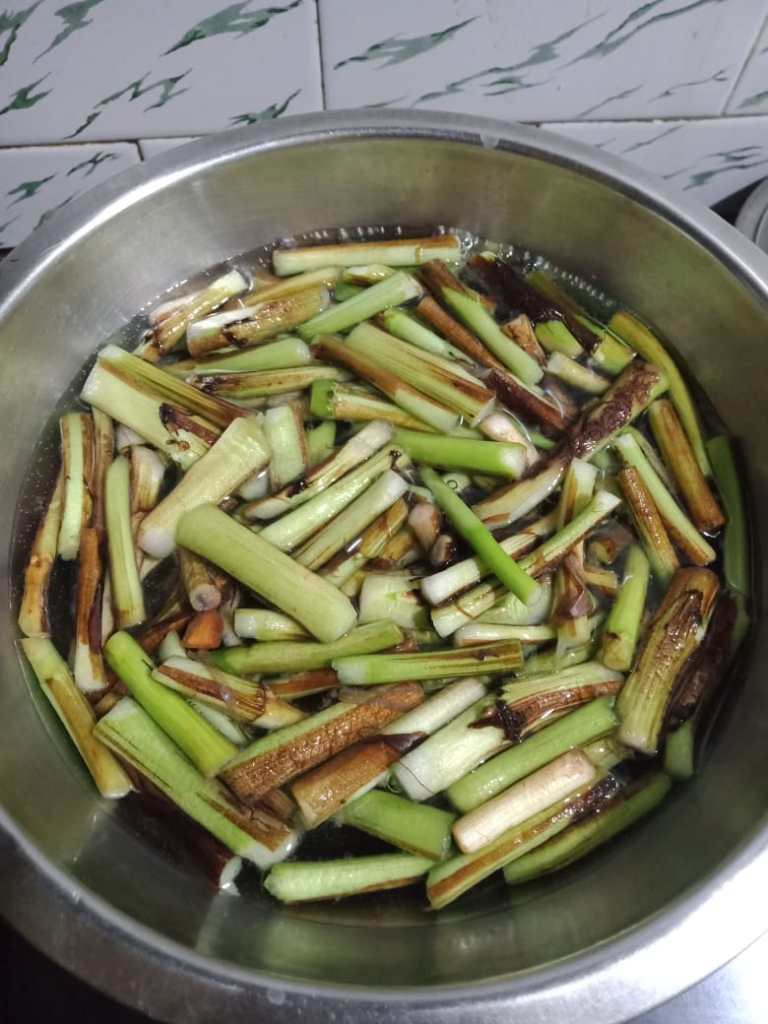
Preparation:
- Take the cut, peeled & thoroughly washed taro stolon pieces in a bowl, add ½ tsp salt, 1 or 2 seeds of tamarind and parboil the stolons for 1 or 2 min.
- Switch off the flame, bring it down, drain the water completely and keep them aside. (Note: Step 1 and 2 are necessary steps for treating the stolons properly before cooking in order to prevent it from causing itchiness of throat).
- Heat oil in a pan, add dry red chili and sauté till it turns black.
- Add fenugreek seeds and let them splutter.
- Add mustard paste, turmeric powder and sauté them to mix.
- Add tamarind pulp or raw mango pieces, salt and sugar and mix them together nicely over a low flame.
- Add the Stolon pieces & boiled jackfruit seeds and saute to mix everything together over low flame.
- Add green chillies & amchur powder and mix.
- Add little water and cover for 1 or 2 minutes and let it cook over a low flame.
- Cook till your stolon turns soft.
- Stir to dry out the water completely by bringing the flame to medium and switch off the flame.
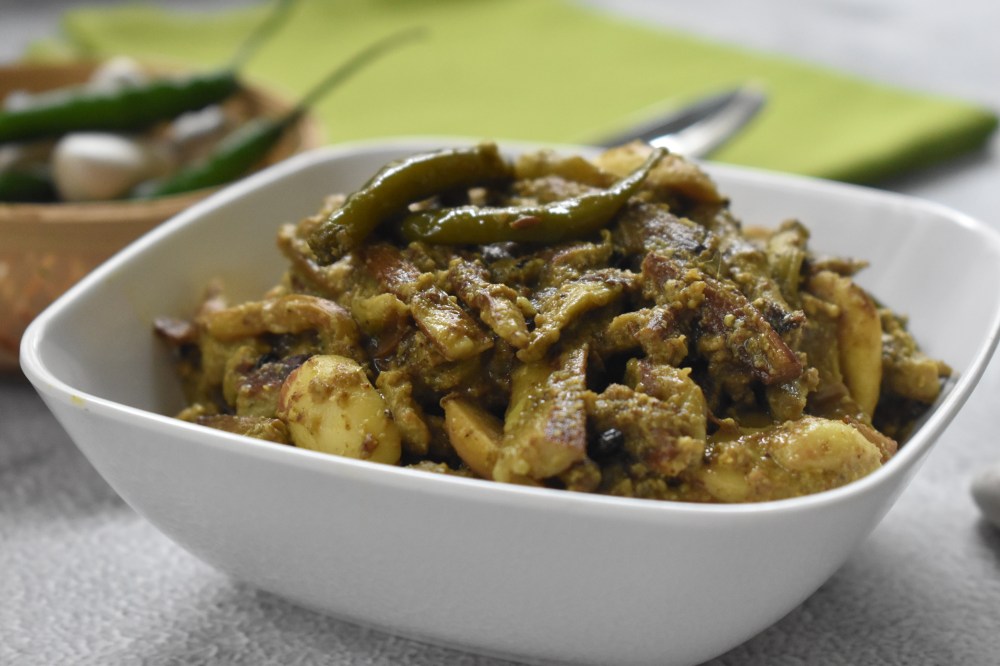
- Your yummy Kochur Lotir Tok korua is now ready to serve. Pair it with freshly steamed rice and give yourself a delicious treat.
Courtesy:
- https://www.thedailystar.net/online/news/the-wonders-taro-stolon-1790335
- https://www.beshideshi.com/product/stolon-of-tarokochur-loti/).
- https://www.webmd.com/diet/health-benefits-taro-root
Discover more from FOODIESTREASURE
Subscribe to get the latest posts sent to your email.

 FOODIESTREASURE
Great side dish!
LikeLiked by 1 person
Thank you so much. Want to know whether taro stolons are also consumed in your place?
LikeLiked by 1 person