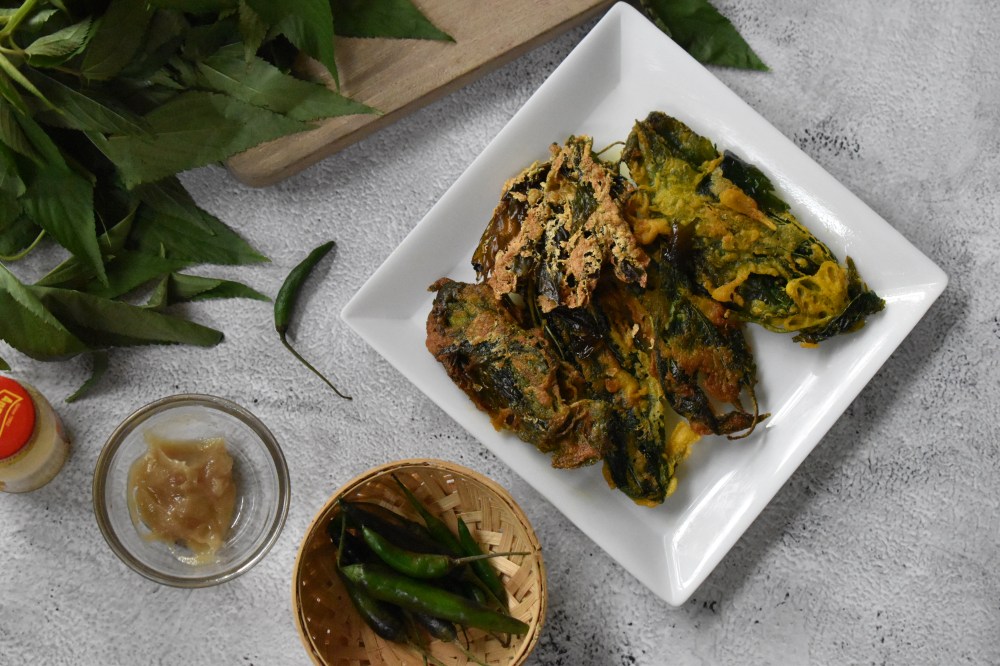
Month of Baisakh has arrived with all its bloom marking the beginning of summer season & bringing with it the flavours of sweetness & joy. In Bengal, baisakh marks the begining of a new year and thus the first day of the month is celebrated as poila boisakh. This is also considered as the beginning of the harvest season in bengal. Since West Bengal is a major hub for the Indian jute industry and Jute is one of the major cash crops of Bengal, jute plantations in the fields are found in plenty throughout Bengal. Since jute plants are found in abundance throughout Bengal and are amply found during this season especially during the spring and summer, it has become common in Bengal to consume these leaves during this season due to their numerous health benefits. It has even become sort of customary to consume these leaves during this month of baisakh during or post poila boisakh.
There are two available varieties of this jute plant, one is white jute & other is tossa jute. The scientific name for which is Corchorus capsularis L. for white jute and Corchorus olitorius for tossa jute. In Bengali, they are commonly known as Deshi paat for the white jute and Tossa paat or Buno paat for the tossa jute.
Though different parts of the Tossa paat Jute plant can be consumed, yet especially their leaves are commonly edible in bengal. They are a popular vegetable in many regions of Asia, Africa, and the Middle East, and are used in various dishes like soups, stews, and stir-fries. They are also known for their nutritional value and can be eaten raw or cooked. This vegetable is predominantly eaten in Africa and Asia, where they mostly meet their high energy requirements with micro nutrient deficient staple crops.
Jute leaves provide a good source of vitamins and minerals, including vitamin C, vitamin A, vitamin B6, potassium and iron. These three vitamins namely the vitamins A, C and E are potent antioxidants that protect the cells from free radicals. The antioxidants in these leaves can also help to improve vision and fertility, among the other benefits. They also contain fibers and are a good source of protein.
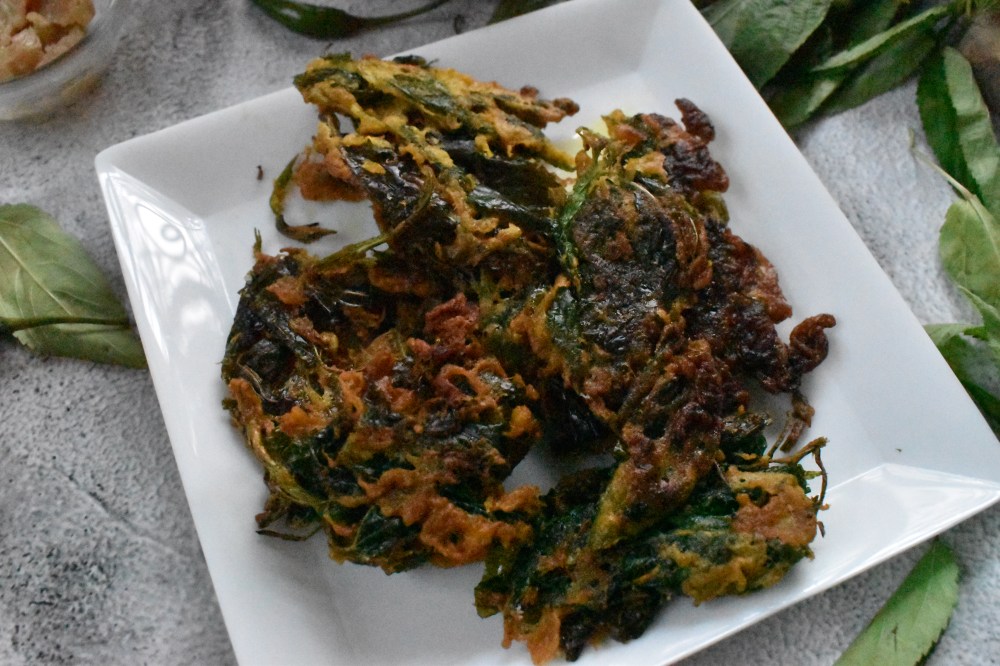
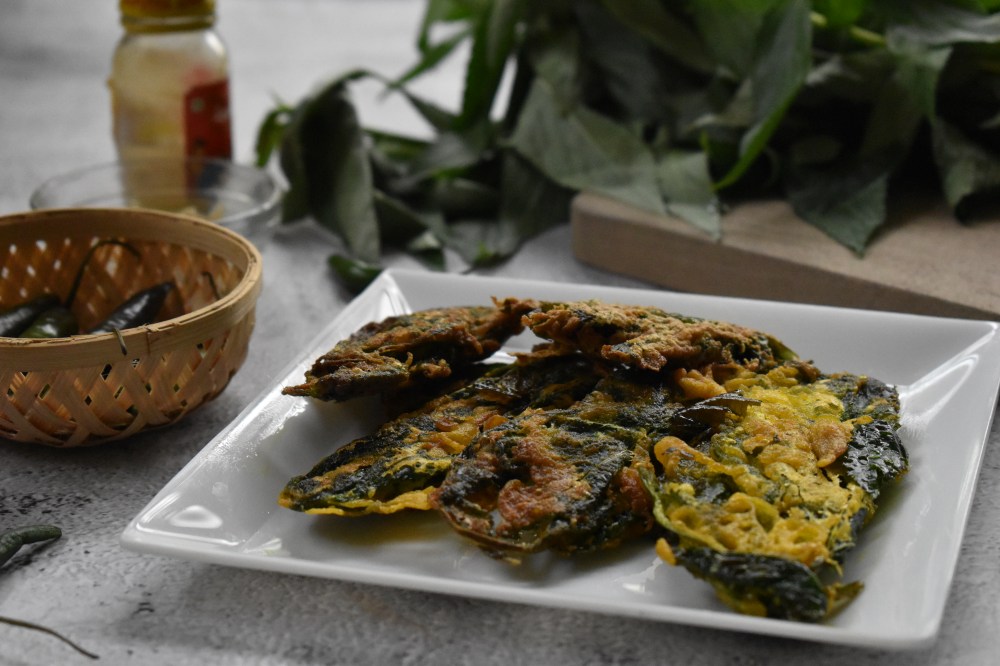
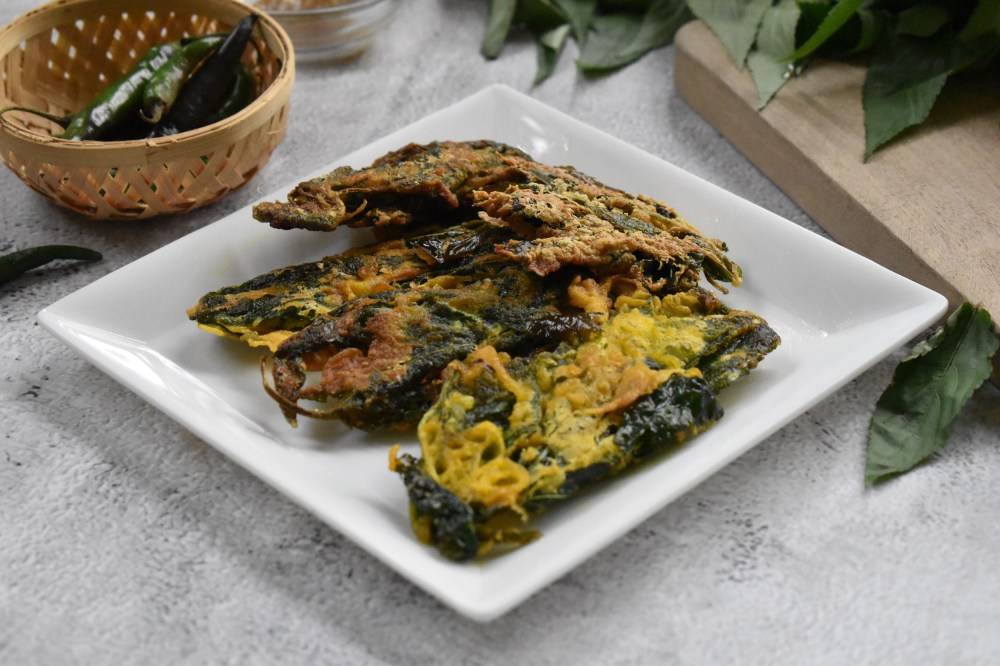
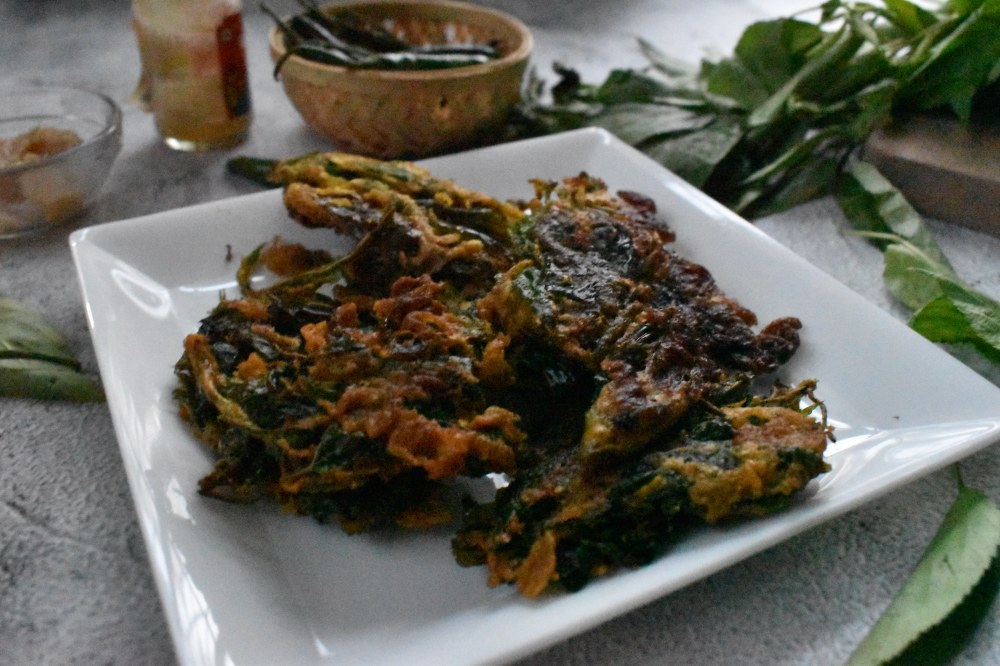
There are a few popular traditional recipes in Bengal for these nutritious leaves. We at our home have a couple of recipes for cooking the jute leaves, among which one is the must have recipe for the poila boisakh celebrations in our home, especially for my father. These jute leaf fritters are mostly prepared among the communities of east bengalis or the baangaals e.g. the Sylheti community and us belonging to the same community, we enjoy having it this way which is super delicious & yet simple at the same time, although a little unhealthy. But sometimes our craving surpasses the health & we just follow our instincts….don’t you?? So now follow your instincts & jump to the recipe right down here for you👇
RECIPE:
Ingredients:
- Paat Paata (fresh jute leaves) – 1 bunch.
- Maida (All purpose flour) – 5 tsp.
- Rice flour – 1 tsp.
- Turmeric powder – 1 or 2 pinch.
- Salt – to taste.
- Water – as required
- Mustard oil (for deep frying) – ½ cup.

Preparation:
- Wash the leaves thoroughly under tap water & let them dry to drain the water completely otherwise your leaves may turn slightly slippery.
- From a bunch, take the leaves along with stem from the front or apex of the stem, which usually contain 5 to 6 leaves, for a single fritter you make. The remaining leaves which get separated from the stem are clumped together and coated with batter to make small fritters out of them.
- In a mixing bowl, prepare your batter for deep frying the leaves by mixing the refined flour, rice flour, turmeric powder and salt along with desired amount of water. The consistency of the batter should be neither too thick or too thin. It should be thick enough just to get smeared over the leaves.
- Heat oil in a wok or kadai over a medium flame.
- When the oil is completely hot, take some leaves together, immerse in the batter to coat them together and throw in the hot oil slowly one or two at a time.
- Fry by turning both sides until it turns golden brown and crisp.
- Strain the oil and put them over a dish or tray.
- Fry the remining leaves in batches in the same way.
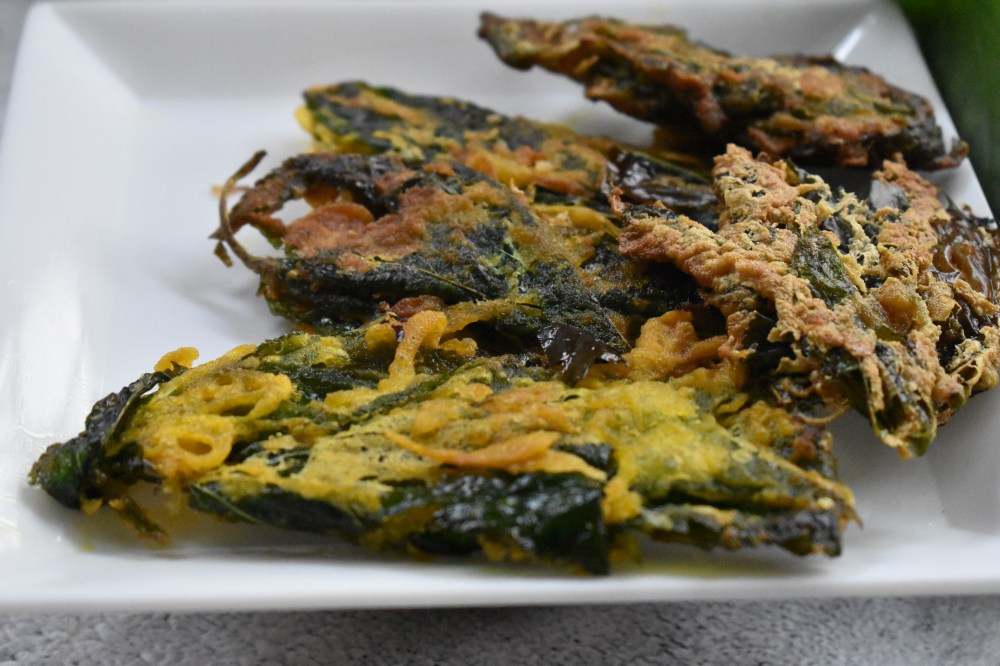
- Your hot and crispy jute leaf fritters are now ready to munch on.
Serve with fresh, hot piping steamed rice with a dollop of ghee or butter or relish it as a snack with your hot cuppa.

Discover more from FOODIESTREASURE
Subscribe to get the latest posts sent to your email.

 FOODIESTREASURE
Something new…never knew jute leaves can be used like this!
LikeLiked by 1 person
Yes it’s a delicacy for the bengalis…Thank you !
LikeLiked by 1 person